



Japan
JAPAN PHOTOGRAPHY TOUR
Japan is a world apart – a wonderful little planet floating off the coast of China – its ancient culture a bounty of riches. From the grace of golden-robed monks at dawn to the ethereal beauty of a Zen rock garden, Japan has the power to enthral any traveller.
This is a place to leave your comfort zone without being uncomfortable. Whether it’s staying in a ryokan (traditional Japanese inn), soaking in a bubbling onsen (hot spring) or gazing at the apparition of a geisha, Japan offers regular doses of ‘wow’ against a backdrop of ultra-modern comfort.
From a stay in a temple at a 1200-year-old UNESCO World Heritage site, grooving with Elvis in Yoyogi park, eating divine morsels in our pick of Japan’s tiny gastropubs, to glimpsing sacred Mount Fuji from bubbling hot springs – you’ll get behind the scenes of this country, both new and old on our Japan photography tour.
share
“Creative Escapes takes everyday travel experiences to an inspiring new level. You’ll learn new creative skills, meet like-minded folk and traipse off the beaten path for a holiday to remember. The experienced guides are photography gurus and passionate travellers, who will lead you to the hippest hotels and the prettiest locations on the quirkiest of adventures. Fun is foremost so there is never a dull moment”

Highlights.
Combining ancient culture with exquisite natural landscapes and dazzling modernity, the Asian nation is stirring an increasing number of travellers’ souls. There has always been a fascination about getting ‘lost in translation’ when it comes to travel, and there’s really no better place to do this than Japan. This is a country where the past meets the future. It can seem full of contradictions – Japanese culture stretches back millennia, yet has also been quick to adopt and create technology, fashion and art.
Our Japan Photography Tour of the “Land of the Rising Sun” curates our pick of the most photogenic hotspots, takes you behind the scenes to get a closer look, and mixes old with new like no other.
On our Japan Photography Tour, you’ll learn to:
Perfect the art of street photography in the most vibrant city on the planet
Gain new skills in low light photography – just after dusk when colours ping
Create narrative-led monochromes inside Kyoto’s famous market.
Understand insider tips on travel photography to make your images stand out.
Practice landscapes at 4,000ft fronting sacred Mount Fuji.
Hone your decisive moment on a pro guided portrait shoot with a maiko, a trainee geisha.
Create a photo series inside a 1200 year old UNESCO pilgrimage site.
How many guests are on each tour? – We only take a maximum of 10 on each tour, per tutor. That way, you can get lots of 1-to-1 guidance from your tutor, learn at your own pace – so you produce photographs that are personal to you.
What’s included on the tour? – We price things pretty simply, all accommodation, tours, tuition, materials, entrance passes and 1-to-1 sessions are included, only flights and meals are extra.
What’s the level of accommodation? – Our hotels are comfortable as we know for you to get the most out of a trip you need to relax and sleep. We pick boutique, interesting, usually smaller and off the beaten track or located to be handy for a planned experience.
How is Creative Escapes different? – Many photography holidays teach you someone else’s style. We teach you to shoot like you – all tuition is done 1-to-1, so you create unique images that are personal to you.
How do I book flights? – To save you money, our team scours the internet to find the best quality flights at the lowest possible price, arrive early and depart late, so you get the maximum amount of time of your holiday on the ground.
I’m a beginner, is this for me? – Around 50% of guests on each tour are beginners, we get some who buy the camera in duty-free. Since we teach you individually, you can develop your skills at your own pace.
How fit do I need to be on your tours? – We plan our tours for all fitness levels, so you can either be dropped right at the location or tour around a little to get your bearings.
What kit do I need? – We always say, bring what you have or can borrow. We spend much of the tour working with you 1-to-1 working out what type of photographer you are, so only then will you really know what kit you really need that suits you.
I’m a vegetarian – do you cater for that? – We like to choose restaurants locals would eat at, that way you feel more traveller less tourist. All of our choices feature a good selection of menu options to suit vegetarians, pescatarians, gluten-free and dairy-free.
How do I book? – Simply click on the Book button on the trip page, or the shopping cart icon on the home page – fill in your details and we’ll do the rest!
Itinerary.
We’ll meet you fresh off the plane at Tokyo Haneda and into our boutique hotel in eastern downtown, where Tokyo’s modern cityscape intersects with the charm of old Edo. We start our Japan photography tour with a gentle walk through these quiet suburbs, getting to grips with using our camera before dining at a local yakinuku; all food cooked over charcoal.
Next morning, we’ll dive into some skills in street photography, then tour the hotspots of the city by metro, from the edgy street fashion culture of Harajuku, catch a wedding by the Meiji shrine then shoot the famous Shibuya crossing at dusk. We’ll round off the day with a well-deserved cocktail at the bar on the 52nd floor of the Park Hyatt, made famous by the 2003 film ‘Lost in Translation’.
Up early this morning to Sunday church – to Senso-ji. It is the oldest Buddhist temple in the capital, and five-story pagoda, trails of incense and vast eaves will take you back to a Tokyo of time gone by.
Later, we’ll swing by Akihabara to tune into Japan’s bizarre otaku culture, then over to the glitzy Kabuchiko, a district of Shinjuku – full of neon, and to Golden Gai, a local yokocho, a maze of narrow streets that look straight off the set of Blade Runner – the perfect urban night shoot. There’s just time for a beer at a quaint izakaya bar and some snacks before taking a look at the best shots of the day.
Today, we’ll head west a few hours to Hakone, Tokyo’s favourite escape. It’s a Japanese ideal: a land of onsen (natural hot springs) and jagged, misty mountains. At the centre is calm, cool Lake Kawaguchi, a natural reflecting pool for Mt Fuji, which rises in the distance.
We’ll check into our modern hotel, equipped with a rooftop indoor mineral onsen pool with direct views of Fuji; our base to explore this spectacular region. We’ll ascend the Hakone Ropeway to the Owakudani crater, a mountaintop volcano with steam vents and bubbling pools; the views of sacred Mount Fuji are to die for.
We start early this morning, with a misty view of Fuji, chance to shoot some incredible vistas in soft light, then, if time permits (and you’re brave enough), we descend deep into the Hakone forests, for a dip in the hot springs at Tenzan Onsen – terraced natural outdoor pools at the foot of a wooded slope, with a stunning traditional style bath house.
Then, we depart south to Kōya-san – a raised tableland covered with thick forests and surrounded by eight peaks – the major attraction here is the Kōya-san monastic complex. One of Japan’s most rewarding destinations, for the natural setting of the area and the opportunity to stay in temples, we’ll get a glimpse of long-held traditions of Japanese life – shooting the morning offering at Okunoin Temple, witness 10,000 lanterns lit floor to ceiling at Torodo Hall, and snap the magical Shingon Buddhist fire ceremony.
We stay in a shokubo – cozy temple accommodation originally for Buddhist priests – with stunning cuisine, in house spa, and incredible views from each room.
Up early, we’re out before dawn to shoot the serene monks in saffron robes lighting incense and ringing bells, capture hypnotic morning chanting in the main hall, then photographing the stunning surroundings of this 1200 year old UNESCO site – this is a photographers paradise for all tastes.
Later, you’ll dine together in the main hall, resplendent in your yutaka robes, enjoying a bento box of edible delights, before a snooze in the most unique hotel room you ever stayed in.
Then to our final stop at Kyoto. With its rich colours, tradition, history and culture, Kyoto is a city that allows visitors a glimpse into the past: atmospheric temples, sublime gardens, traditional teahouses and geisha scurrying to secret liaisons. We check into our designer hotel in the heart of Gion, the stunning geisha district, then take a tour early evening through the ancient cobbled streets, before a review of the shots of the day.
Kyoto happens to have one of the world’s largest collections of UNESCO World Heritage sites; so today, we learn the inside track to on professional travel photography to shoot travel shots that stand out from the pack.
We first head west to shoot the other-worldy Arashiyama bamboo grove, catch the glinting Kinkaku-Ji, – the Zen temple’s top two floors are completely covered in brilliant gold leaf creating a magnificent view against a bright blue sky and lush green garden. Towards dusk, we head to Fushimi Inari, Japan’s most famous shrine, on a hidden hike far from tourist eyes, exploring secluded trails that lead through to thousands of vibrant tori gates set against bamboo and beautiful evergreens. There’s just time for some street food and a chilled glass of something at a local izakaya to complete the day.
Time to flex your documentary and portraiture skills today, starting at the 400 year old Nishiki Market in Gion, which is known as “Kyoto’s Kitchen” by the locals. The vibrant and atmospheric market is the best traditional food market in the city and is lined with stalls offering tasty goodies such as yakitori, tempura and sashimi.
Later, we tour the backstreets around Pontocho Dori, famous for its geisha and traditional Japanese tea houses. And then one of the highlights of our tour, a private photoshoot in a 16th century temple of a stunning geisha or maiko (apprentice geisha). We’ll be on hand to help create your set, shoot your idea and enjoy one of the most memorable photoshoots you’ll ever experience. Truly stunning.
Finally, we round off our tour with a show of our finest images, before heading out to celebrate in the mazy backstreets of old Kyoto. Next morning, it’s time for a last bit of shopping, before we head to the airport and fly home.
Details : Japan Photography Tour
22 – 31 May, 2026
16 – 25 October, 2026
10 days. 9 nights. Starts in Tokyo and ends in Kyoto.
£3500 / £395 single supplement
Price includes
9 nights boutique accommodation at listed hotels (or similar)
10 days tuition from our professional photographer/guide
Portrait shoot with a Maiko, a Geisha apprentice
Group transfers from the airport on suggested flights
All transportation between shooting locations
All entrance passes to Temples & National Parks
Multiple 1-on-1 tuition sessions
Price excludes flights & meals.
There are direct flights to Tokyo Haneda from the UK, serviced by British Airways, JAL and All Nippon Airlines. Prices start from £500. We recommend flying return & direct with BA or JAL arriving Haneda on day 1, both around 0700, so you start the tour early. As the trip ends in Kyoto, you can either fly back from there, or we recommend getting a return to Tokyo, which is cheaper, and take the bullet train back to Tokyo which is around £70 one way – another experience to add to your journey.
Once minimum numbers are met, we will recommend the best international flights based on price, duration and Skytrax rating.
"Fabulous locations, amazing hotels & great memories. Thanks to Creative Escapes I have moved from taking a gazillion bland photographs to images I am really proud of. Already thinking about my next trip!"
Lorraine Byrne, Dublin

Cuba
Cuba hasn’t changed much. That’s precisely the point.
Eleven days. Havana, Viñales, Trinidad, back to Havana. Small group, good hotels, no filler. You’ll have tea with Roberto Salas (Castro’s personal photographer) in his Havana home, get inside the Cuban National Ballet during rehearsals, watch boxers train at Rafael Trejo as the light drops, and take a catamaran to Cayo Blanco for a lobster BBQ and water that belongs in the Bahamas.

WEATHER
21 - 29°C

DURATION
11 DAYS

DEPOSIT
FROM £799

GROUP
CURIOUS ADULTS

GROUP SIZE
MAX 10

DOWNTIME
LESS

HOTEL
BOUTIQUE

PHYSICALITY
ACTIVE
share
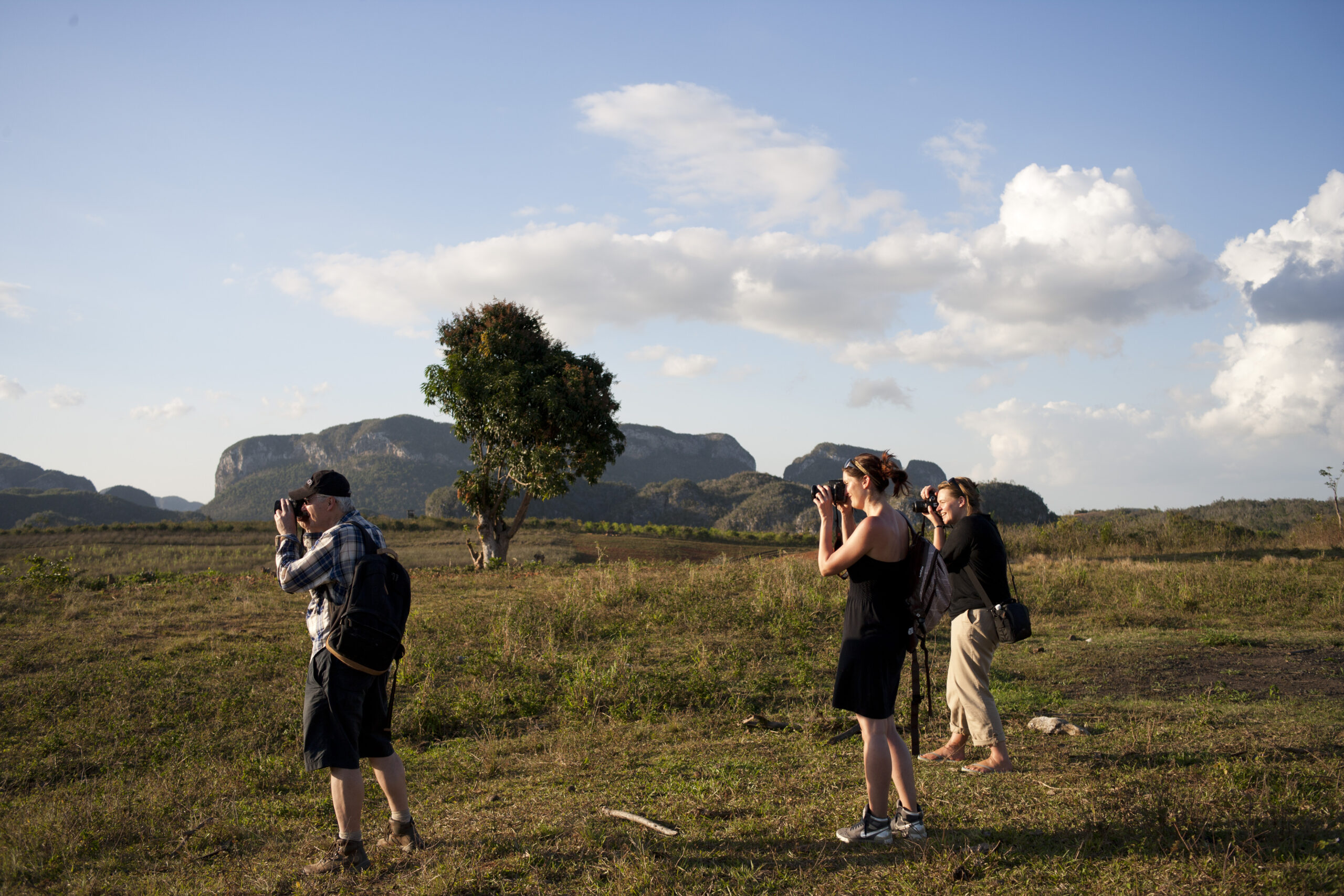
Named on of The Guardian’s Top 10 Photography Holidays, “you shoot Havana’s fading colonial architecture, learn techniques for close-ups of its famed murals, and take some black-and-whites at a cigar factory – before reviewing your pics over mojitos and checking out the local music scene. You’ll also head out to rural Cuba for portraits of tobacco farmers and capture the dusk light over the limestone mogote hills.”


Highlights.

Behind the Scenes.

Itinerary.
Flights land late, but Havana doesn’t wait. We head straight out to La Bodeguita del Medio, which is roughly the size of your living room and somehow contains a full band, horns, singers, a barman making a dozen mojitos at once, and a crowd that has completely given up on personal space. First drink, first hour. Welcome to Cuba.
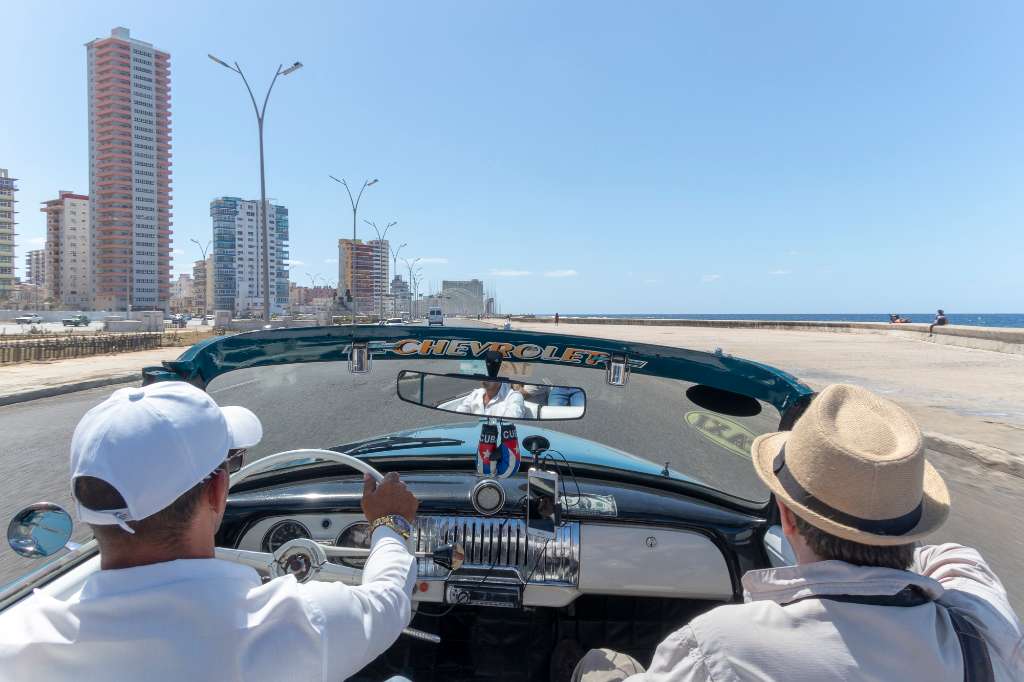
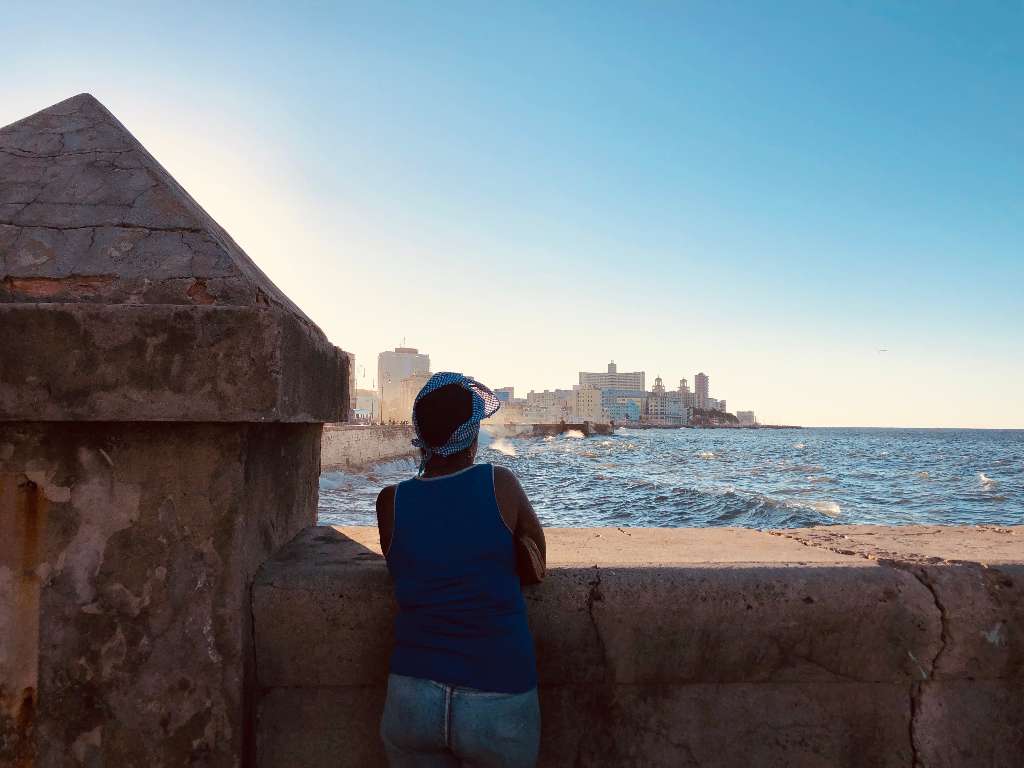
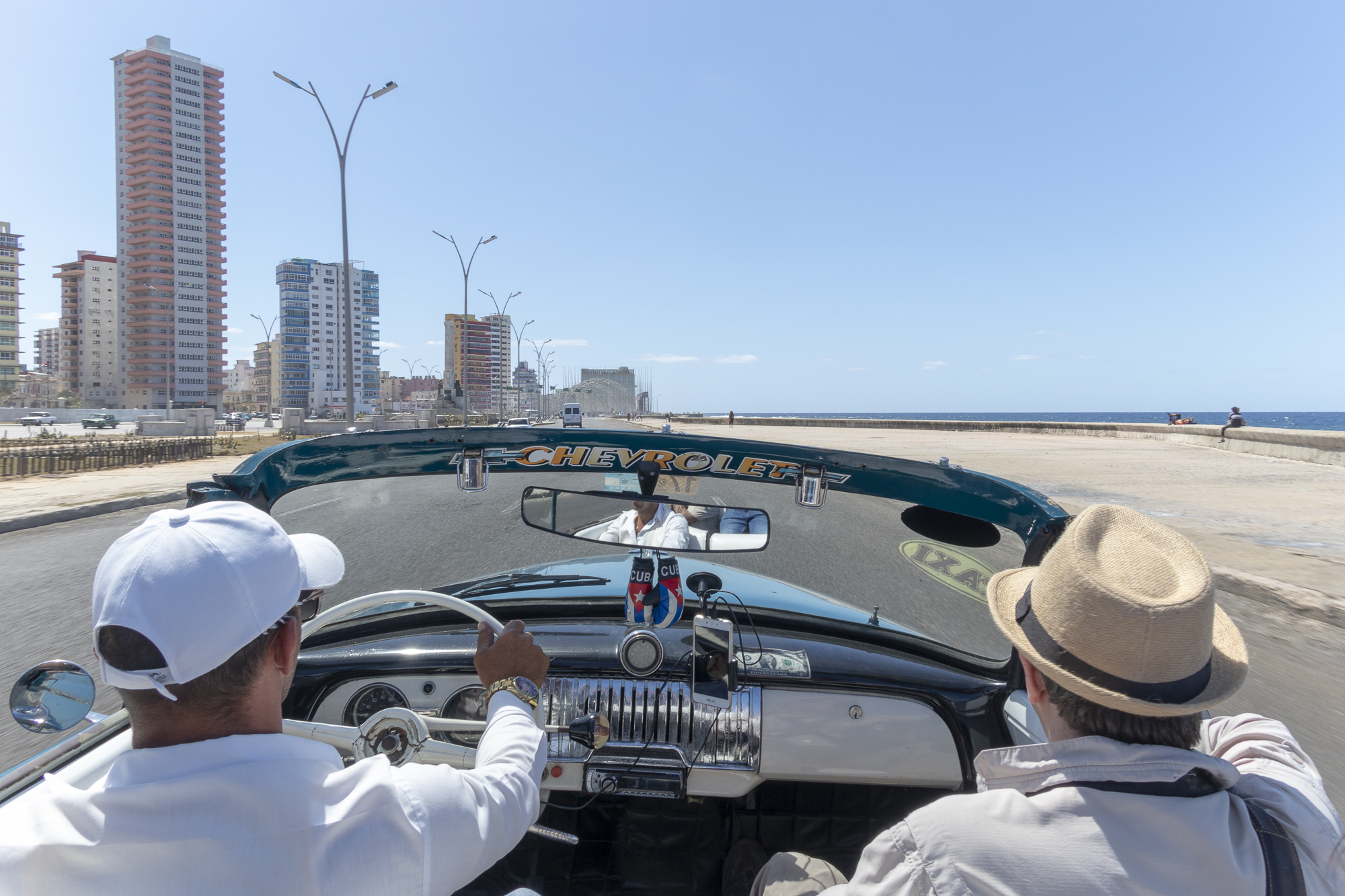
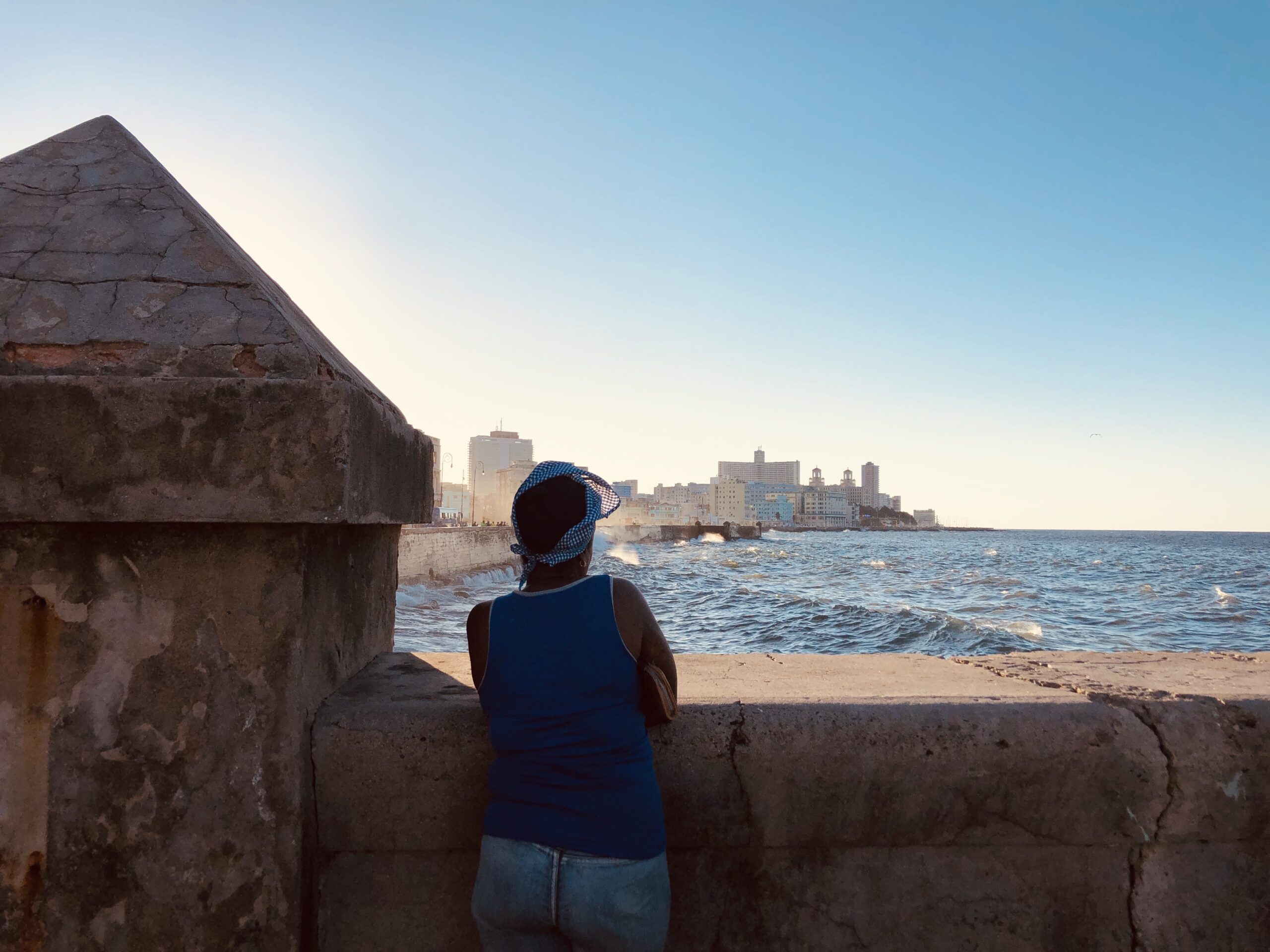
The next morning, out early into Habana Vieja before the tourists arrive. Vintage cars in the main square, the old town at its best. We cover the basics of working with your camera on the street, then spend the rest of the morning exploring. In the afternoon, into the back of an open-top Buick along the Malecón towards Revolution Square, where Castro once addressed over a million people. You can still feel the scale of it.
That evening, dinner at Casa Miglis. A paladar tucked inside a private Havana home. The kind of place you’d never find without someone pointing you there.
This morning, a private cigar rolling house that doesn’t appear in any guidebook. A master roller who has been at it for decades, a cigar made to your exact specification, and a room that smells like the best version of Cuba. Not a tourist experience. The real thing.
Then to Roberto Salas. Castro’s personal photographer for twenty years, still living in Havana, still happy to talk. He opens the archive, shows you the work, and tells you what was actually happening behind the photographs. The stories are better than the pictures, and the pictures are extraordinary.
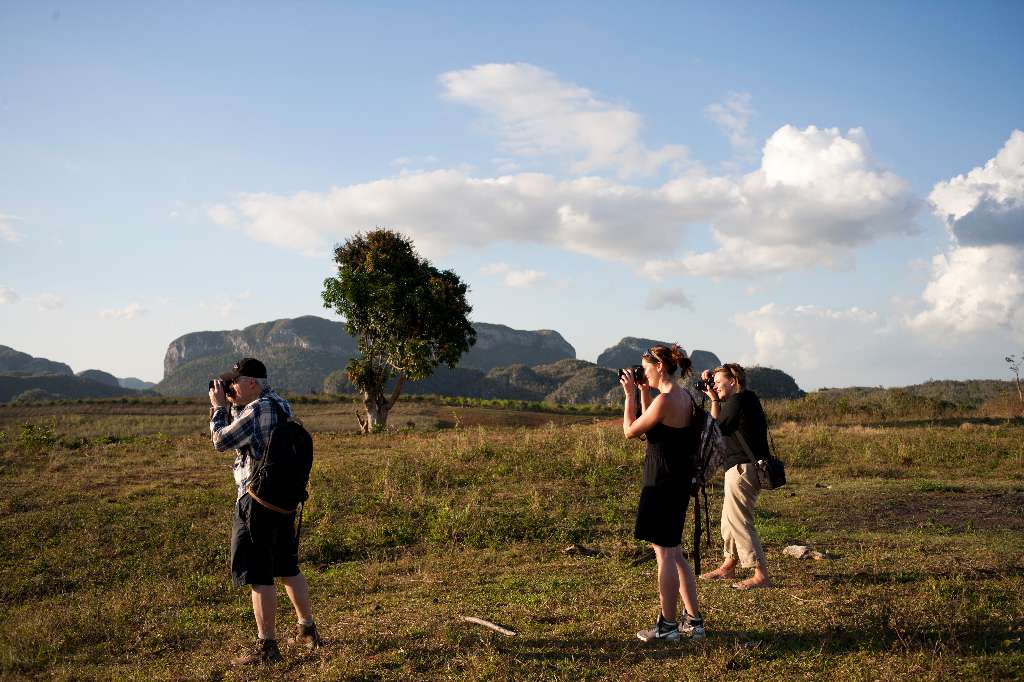
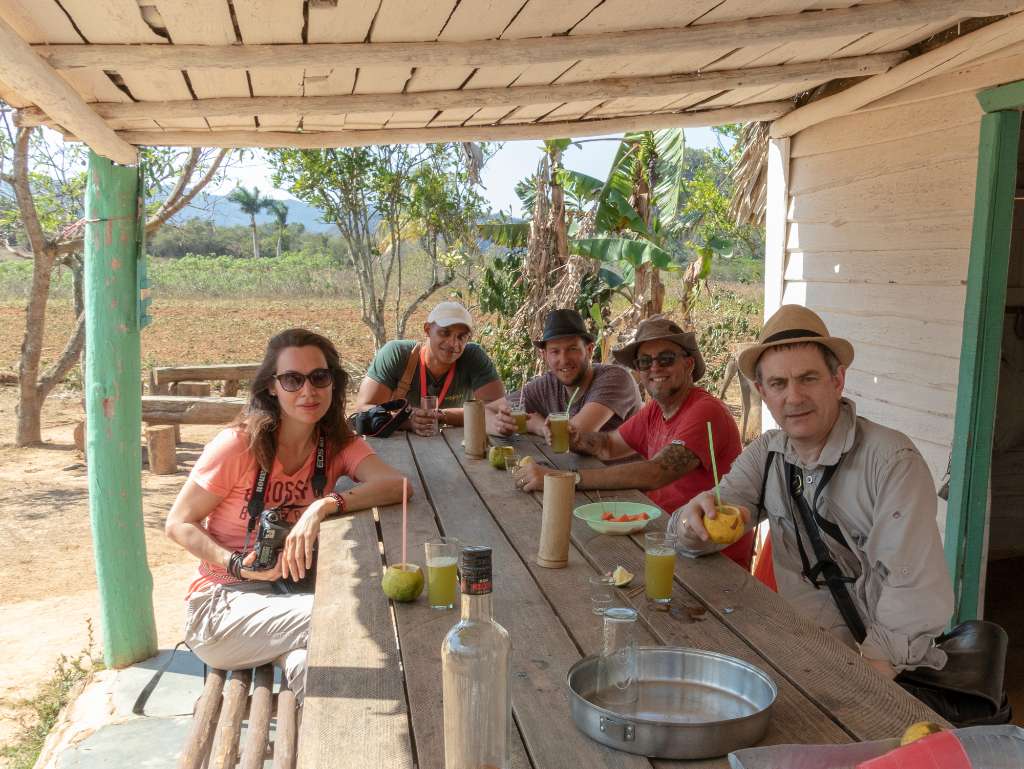
An hour out of Havana the landscape changes completely. Flat tobacco fields, limestone mogotes rising straight out of the ground, mist sitting in the valley if you’re early enough. One of the most distinctive places on earth, and it knows nothing about it.
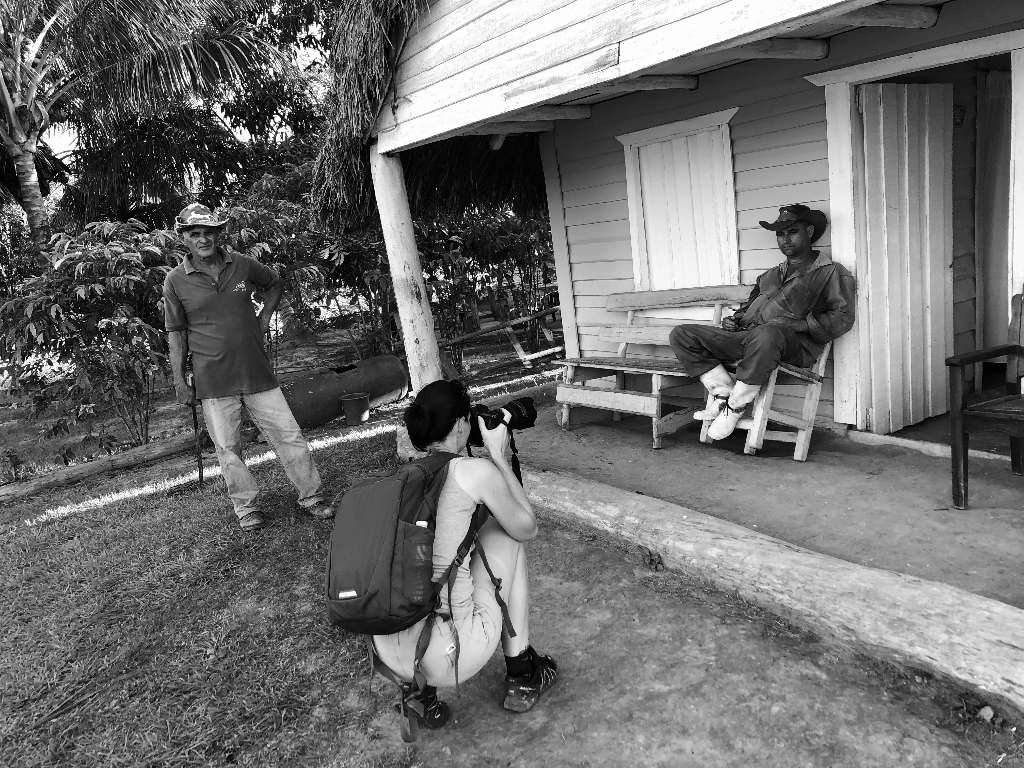
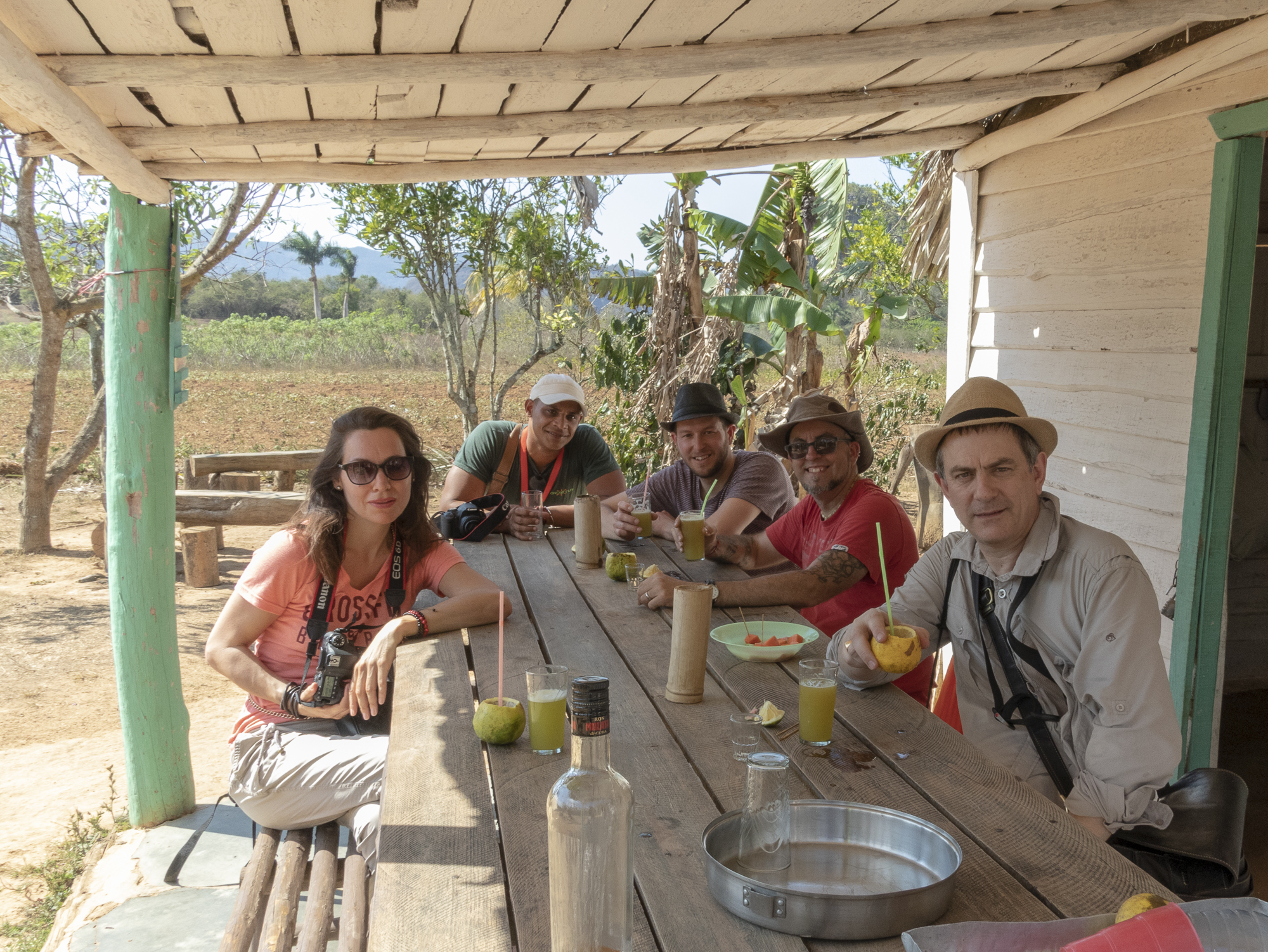
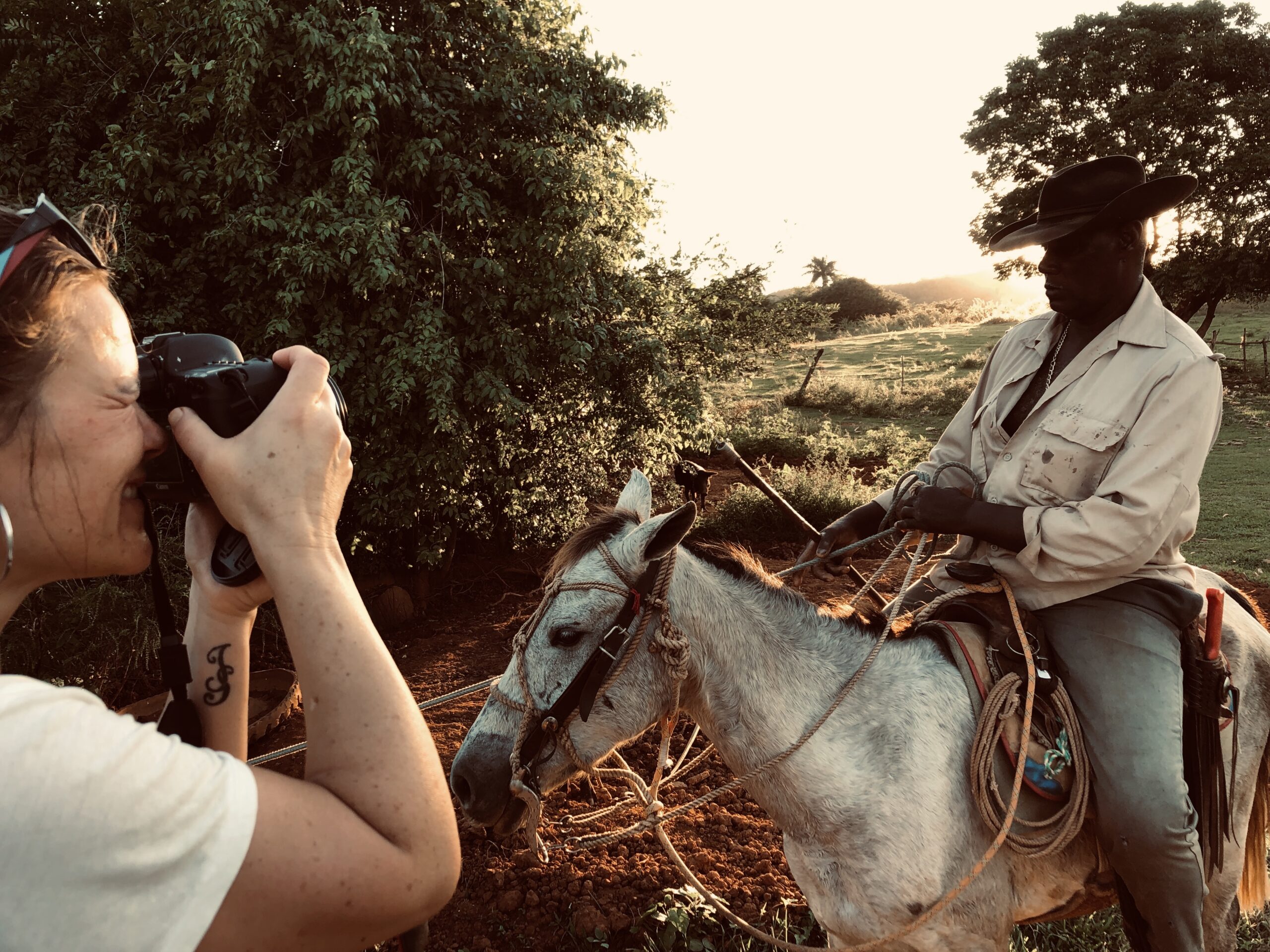
Lunch on an organic farm overlooking the Silencio valley, then to a working tobacco farm where the same families have been growing the same crop for generations. We craft portraits, learn how a cigar goes from leaf to finished product, and attempt to roll one ourselves. Results vary.
The afternoon light in the valley is something you won’t forget. We stay until it’s gone.
South east out of Havana and Cuba changes around you. By the time you reach Trinidad, a UNESCO-listed Spanish colonial town that genuinely stopped changing in 1850, the pace has dropped completely. The mansions here still have their original Italian frescoes, Wedgwood china, and French chandeliers. Cobbled streets, compact plazas, and around every corner something worth stopping for.
That evening, a live acoustic concert under the stars in the main plaza.
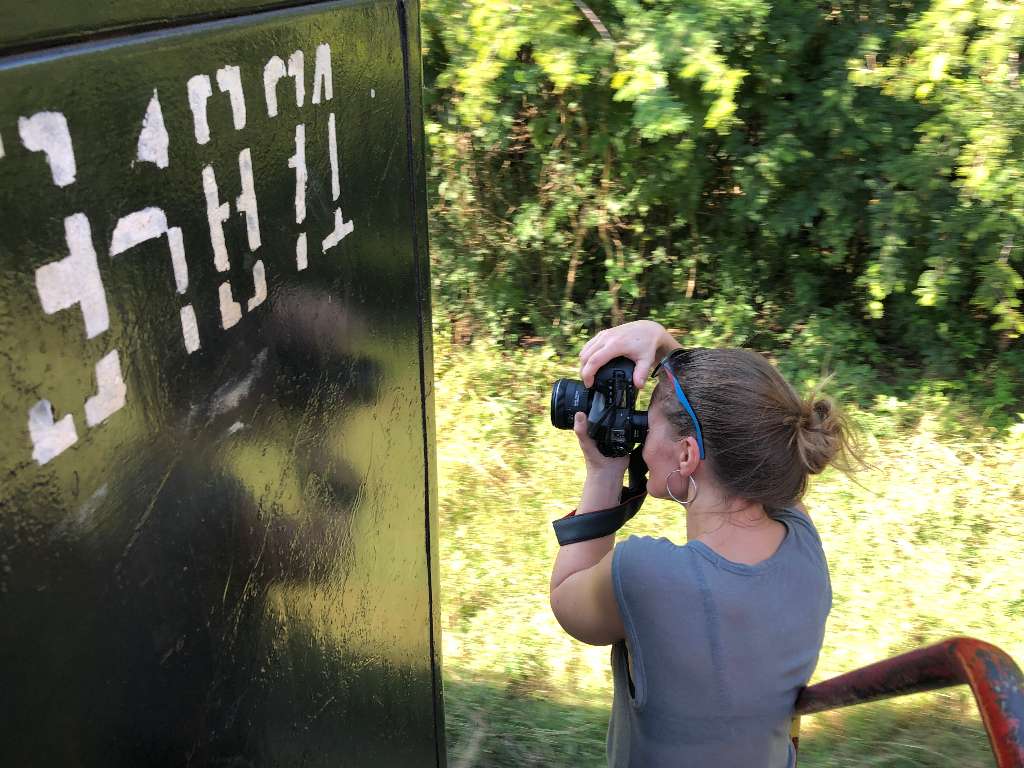
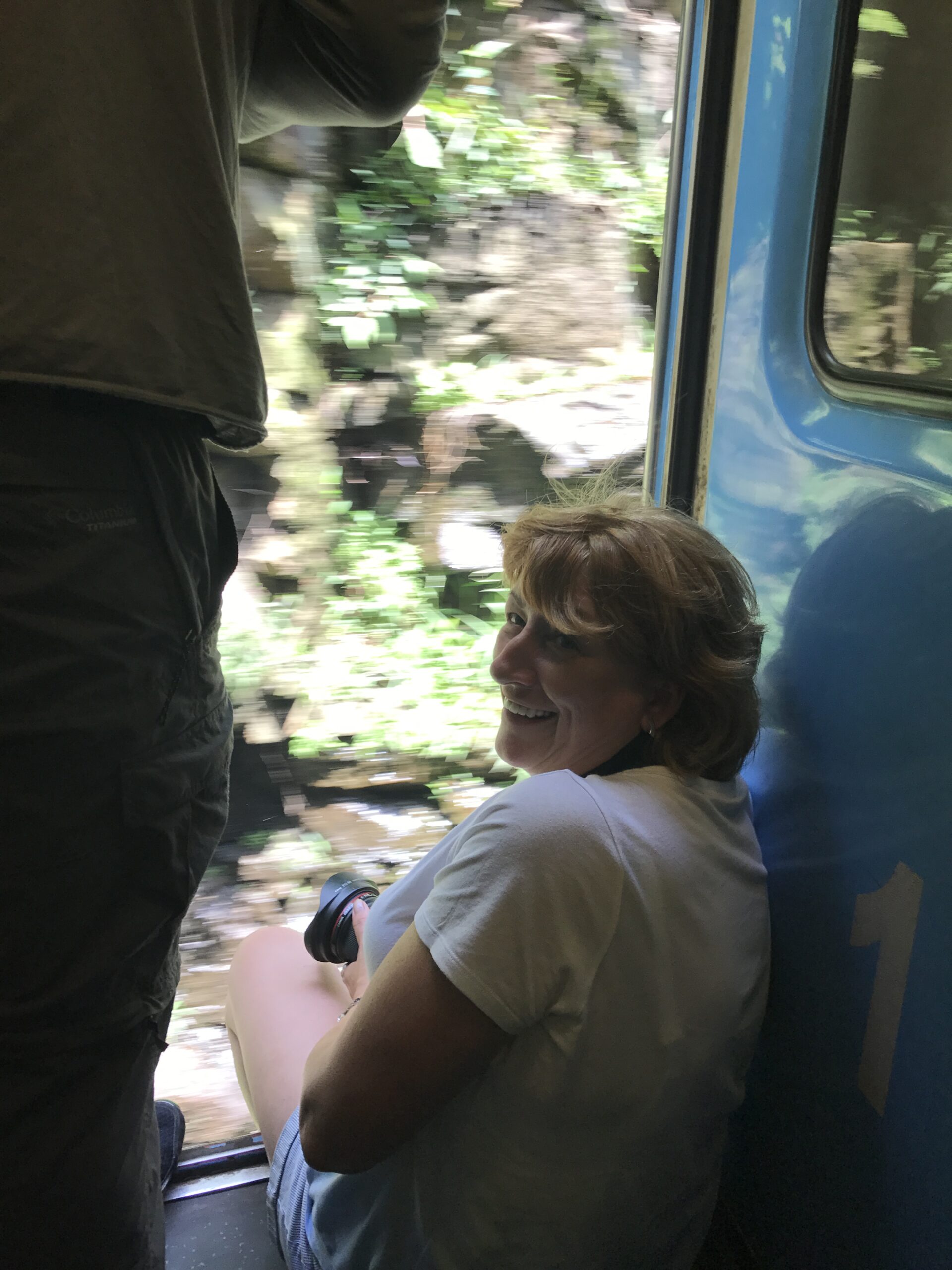
Next morning, aboard a 1919 wooden-carriage train through the Valle de Los Ingenios and its vast sugar-cane landscapes. There’s a bar on board, a man making mojitos, and a band. The scenery does the rest.
Trinidad’s cobbled streets are made for black and white. The light, the textures, the faces. We spend the morning in them.
The next day is yours entirely. A catamaran to Cayo Blanco, where the water is clear, the sand is white, and lunch is lobster off the grill. Or Playa Ancon, a long quiet beach twelve kilometres from town. Or the Topes de Collantes national park for mountain trails that end at a waterfall. Nobody tells you what to do. That’s the point.
Back via the Bay of Pigs and Cienfuegos, arriving into the old town as the afternoon light turns everything gold. Havana at this hour looks like a film set. The difference is nobody’s acting.
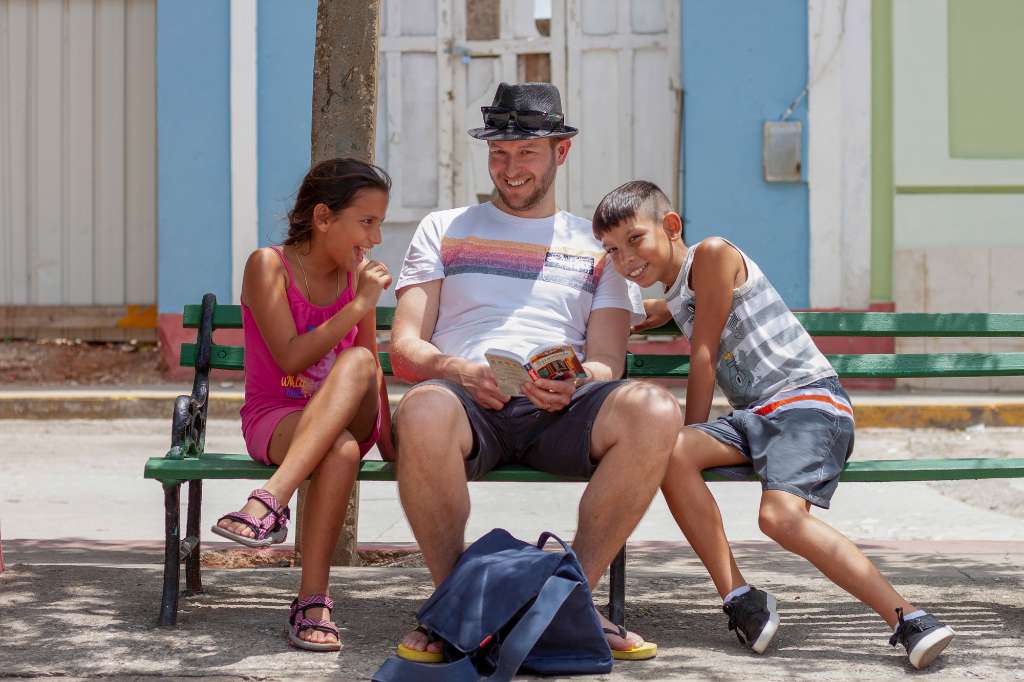
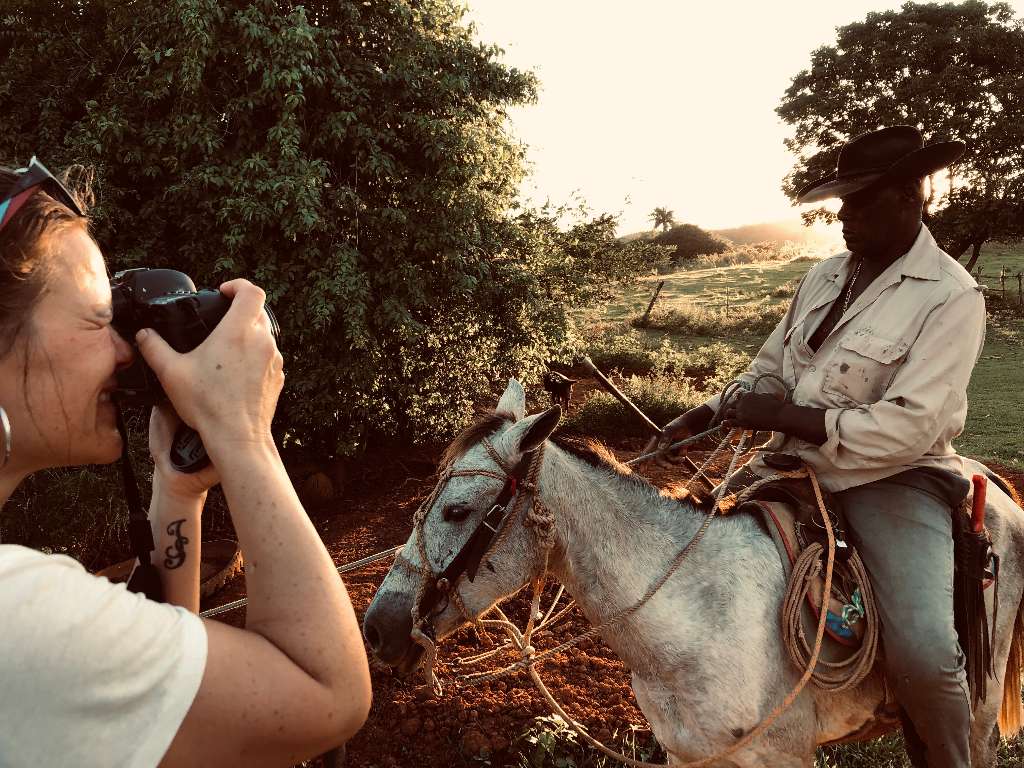
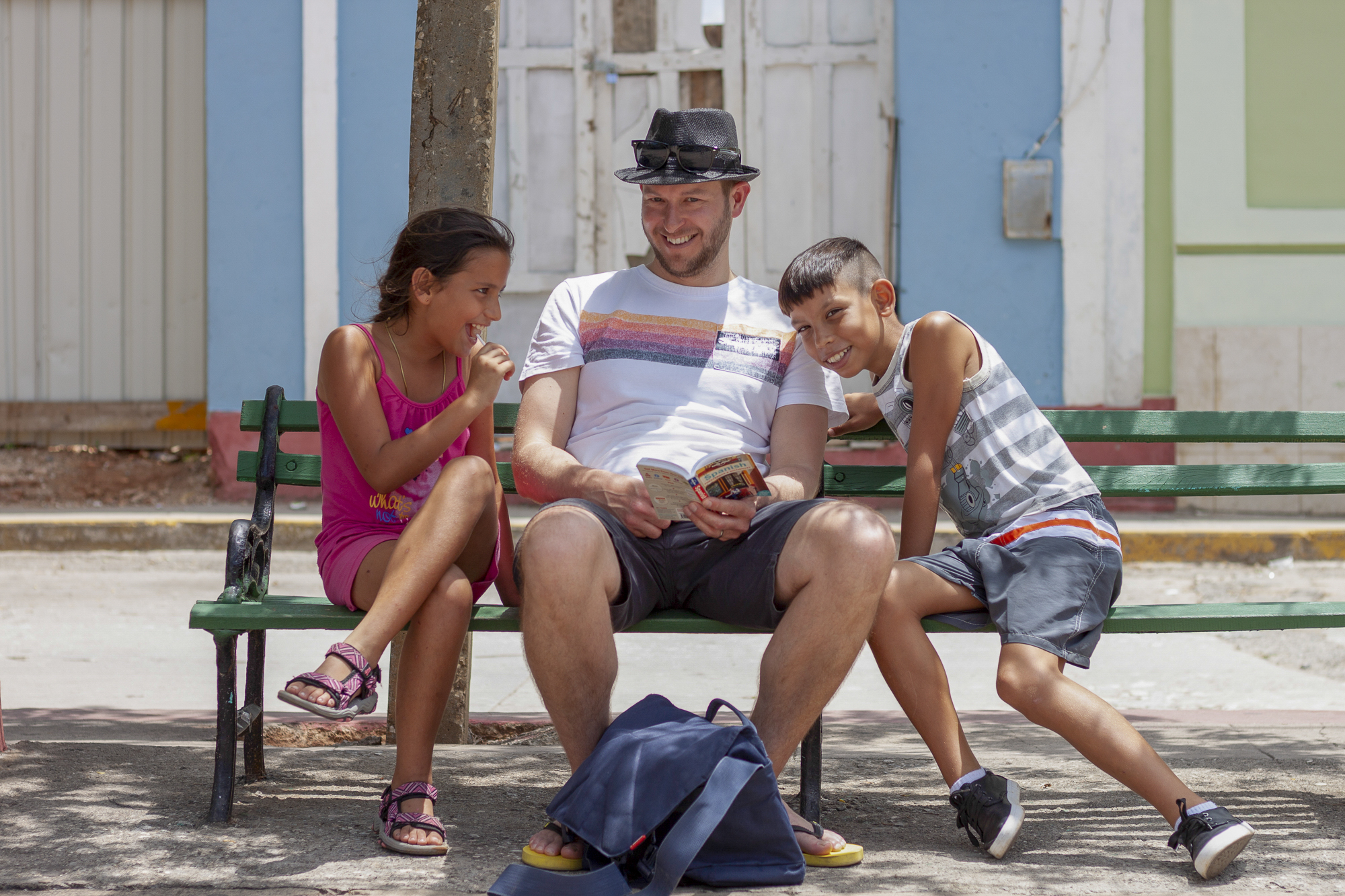
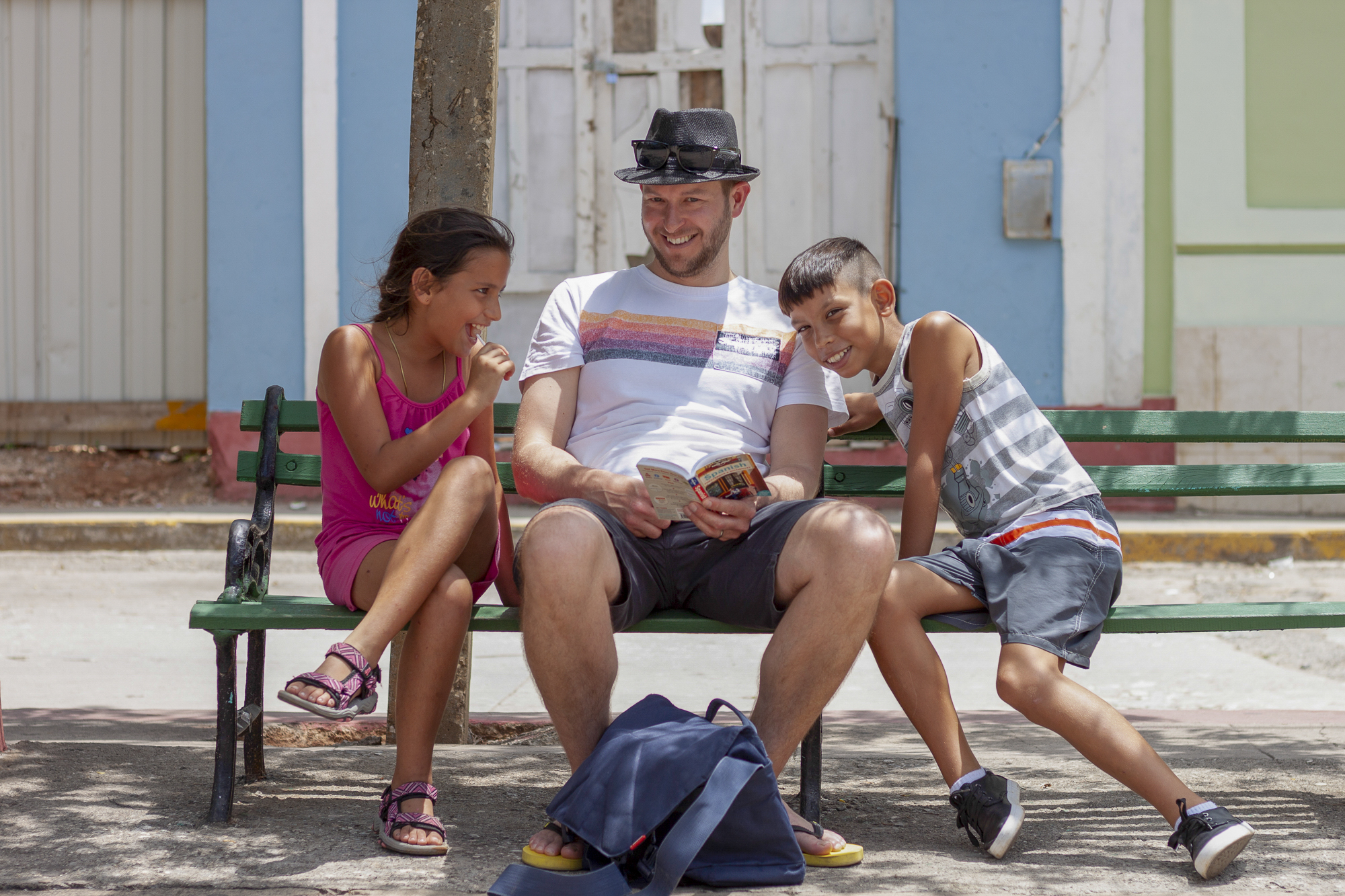
We head into the streets and the streets open up. Cubans are extraordinarily welcoming. You end up inside people’s homes, talking, looking around, being offered things. It happens naturally and it happens every time. The cameras come out when they feel right.
The Cuban National Ballet during morning rehearsals. We go in, watch, and talk to the dancers. Then a street graffiti tour through parts of Havana most visitors walk straight past.
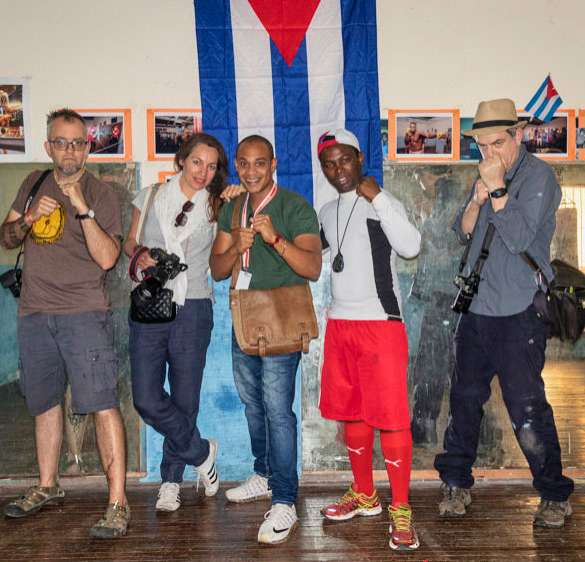
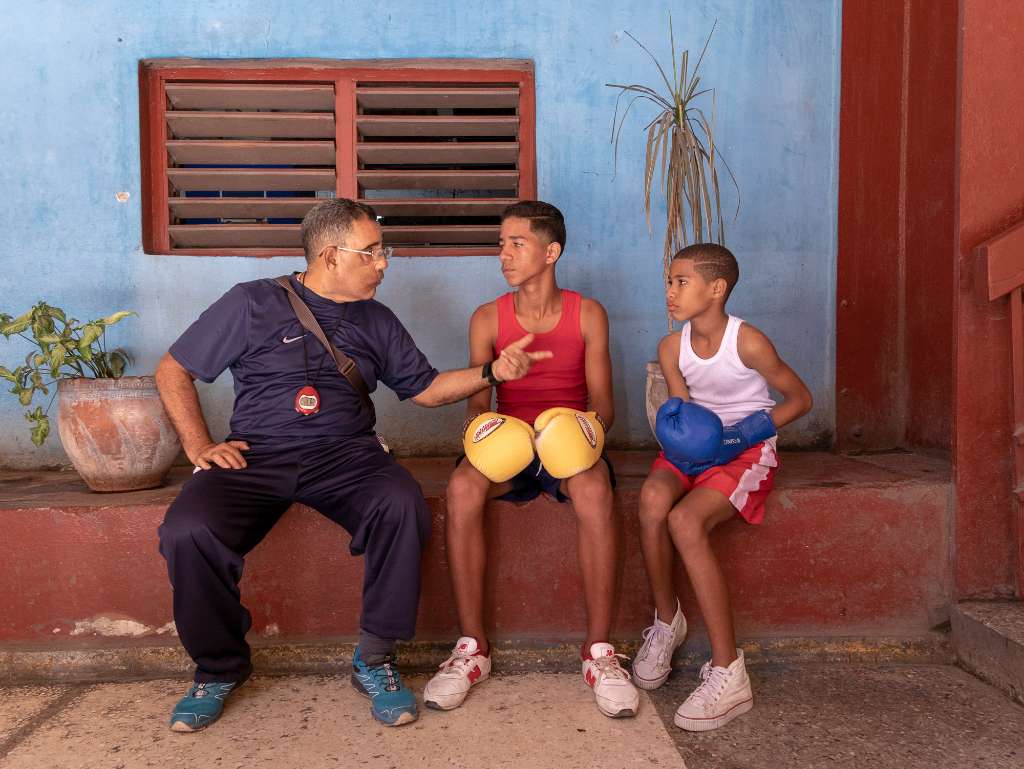
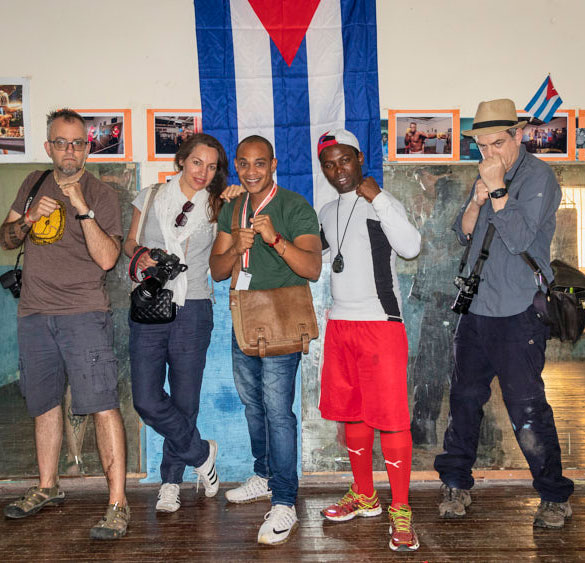
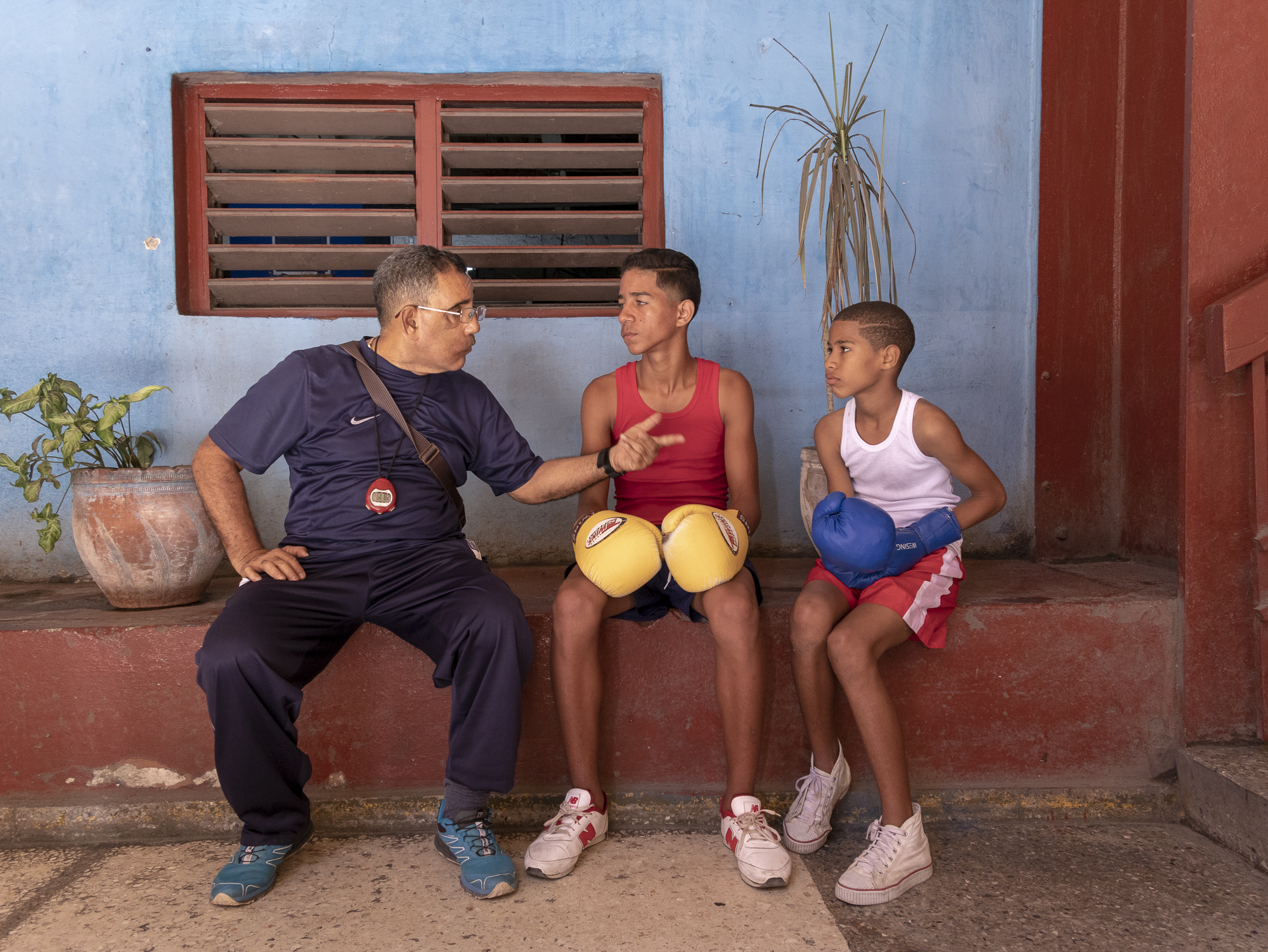
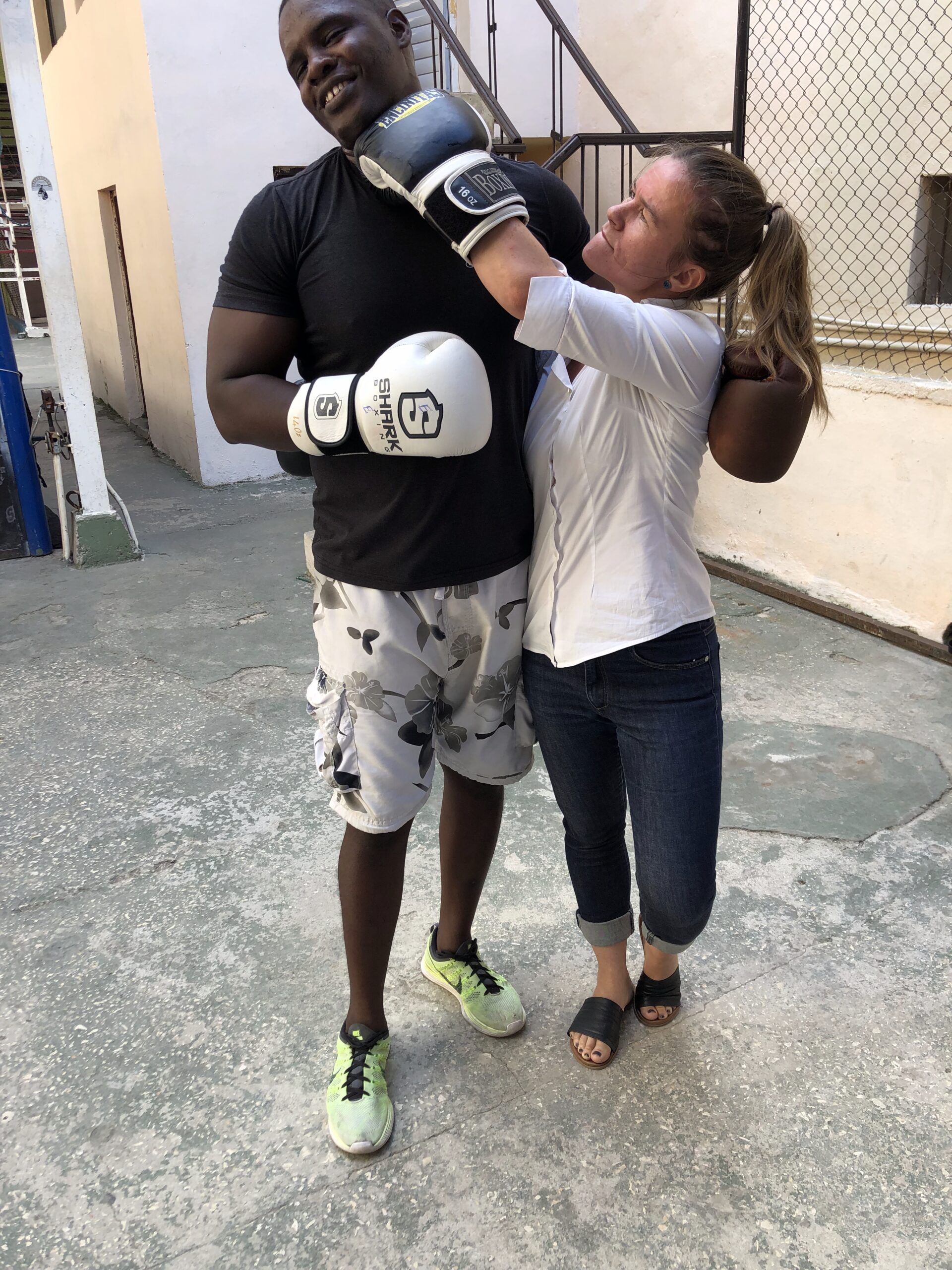
Mid-afternoon, we shoot the interiors of La Guarida. A paladar inside a crumbling Havana mansion, all peeling grandeur and extraordinary light. Then over to Rafael Trejo boxing gym, one of Havana’s great institutions, where the junior boxers train in an open-air ring with the city as a backdrop.
That evening, dinner at La Guarida. It lives up to the photographs.
Final day. Flights are tonight, so the morning is unhurried. Tea on the terrace of the Hotel Nacional, where Lucky Luciano once held a mob summit and where Churchill, Sinatra, Brando, and Ava Gardner all stayed at various points. The hotel knows exactly what it is and makes no apology for it.
Then to Coppelia, the vast outdoor ice cream parlour that Cubans have been queuing at since 1966. One last conversation about your photographs, your trip, and where you might take things next. Then the airport.

Dates & Prices.
19 – 29 November, 2026
8 – 18 April, 2027
18 – 28 November, 2027
11 days. 10 nights. Starts and ends in Havana, Cuba.
£3995 / £380 single supplement
Price includes
10 nights accommodation at listed hotels (or similar)
11 days tuition from our UK-based pro photographer/guide
1-to-1 photography guidance throughout, at your pace
Private audience with Roberto Salas at his house
Private entry to exclusive cigar rolling house, with cigar
Entry to the Cuban National Ballet (permission granted on the day)
Private photoshoot at a famous boxing gym in old Havana
Guided walk, with lunch, through the tobacco fields in Vinales
Group transfers to and from the airport from suggested flights
All transportation between shooting locations
Train ride through rural Cuba
Price excludes flights & meals.
There are regular flights to Havana from the UK via Europe, with Iberia, British Airways, Air France, KLM, and Air Europa all operating routes. Return flights typically start from around £650. Once minimum numbers are confirmed, we’ll recommend the best options based on price, duration, and airline rating.
A note on entry requirements: Cuba now operates an eVisa system, which is straightforward to apply for online before you travel.
One thing worth knowing: if you’re planning to visit the United States after Cuba, the eVisa and the US ESTA don’t work together. The simple fix is to apply for a standard ten-year US visa instead of an ESTA. It’s a routine application, not a complicated one, and once you have it you won’t need to think about it again. If you’re unsure, just get in touch and we’ll point you in the right direction.
US nationals and anyone who has recently travelled to the US are also very welcome on this trip. Drop us a line before booking and we’ll talk you through what applies to you.
One important thing to know before you book flights: we confirm the trip once minimum numbers are reached. We will contact you as soon as that happens and suggest the best flight options at that point. Please do not book flights before we confirm. We know that feels like an extra step. It protects everyone.

Hotel Nacional, Havana *****
This famous hotel built in original Art Deco style in 1930 has welcomed its fair share of celebrities over the years — Frank Sinatra, Winston Churchill and Ernest Hemingway have all been guests and who can blame them?
Finca Kenia
Exuding 19th century Cuban charm, Finca Kenia is a wonderfully restored old house on the edge of the Santa Rosa valley.
I had a fantastic time in Cuba last month with CE, my first group holiday of any kind & I was nervous but need not have worried! Hotels, guide, tutor & locations all excellent plus the company of a lovely bunch of fellow travellers made it a very enjoyable memorable trip! Thank you! Jo, London

Japan
Monks at dawn. A geisha under the cherry blossom. Fuji from a rooftop onsen. Nobody comes back from Japan and says it was fine.
Ten days. Tokyo’s crossing at dusk and a cocktail on the 52nd floor. A Buddhist fire ceremony in an 1,100-year-old cedar forest. Ten thousand lanterns at Torodo Hall. Thousands of vermilion torii gates on a trail most tourists never find. A portrait shoot with a maiko in Maruyama Park. Small group, good hotels, a camera that gives you a reason to slow down. Most guests come on their own.
WEATHER
19 - 25°C
DURATION
10 DAYS
DEPOSIT
FROM £895
GROUP
CURIOUS ADULTS
GROUP SIZE
MAX 10
DOWNTIME
LESS
HOTEL
BOUTIQUE
PHYSICALITY
ACTIVE
share
An amazing trip to Japan … I came home with images I would not have captured without our tour leader’s local knowledge. Truly an immersive experience – the buzzy backstreet bars in Tokyo, our night-time temple visit, the early morning blessing ceremony, our maiko photoshoot, and perhaps the highlight: the Buddhist fire ceremony. Fiona, Bristol

Highlights.
Behind the Scenes.
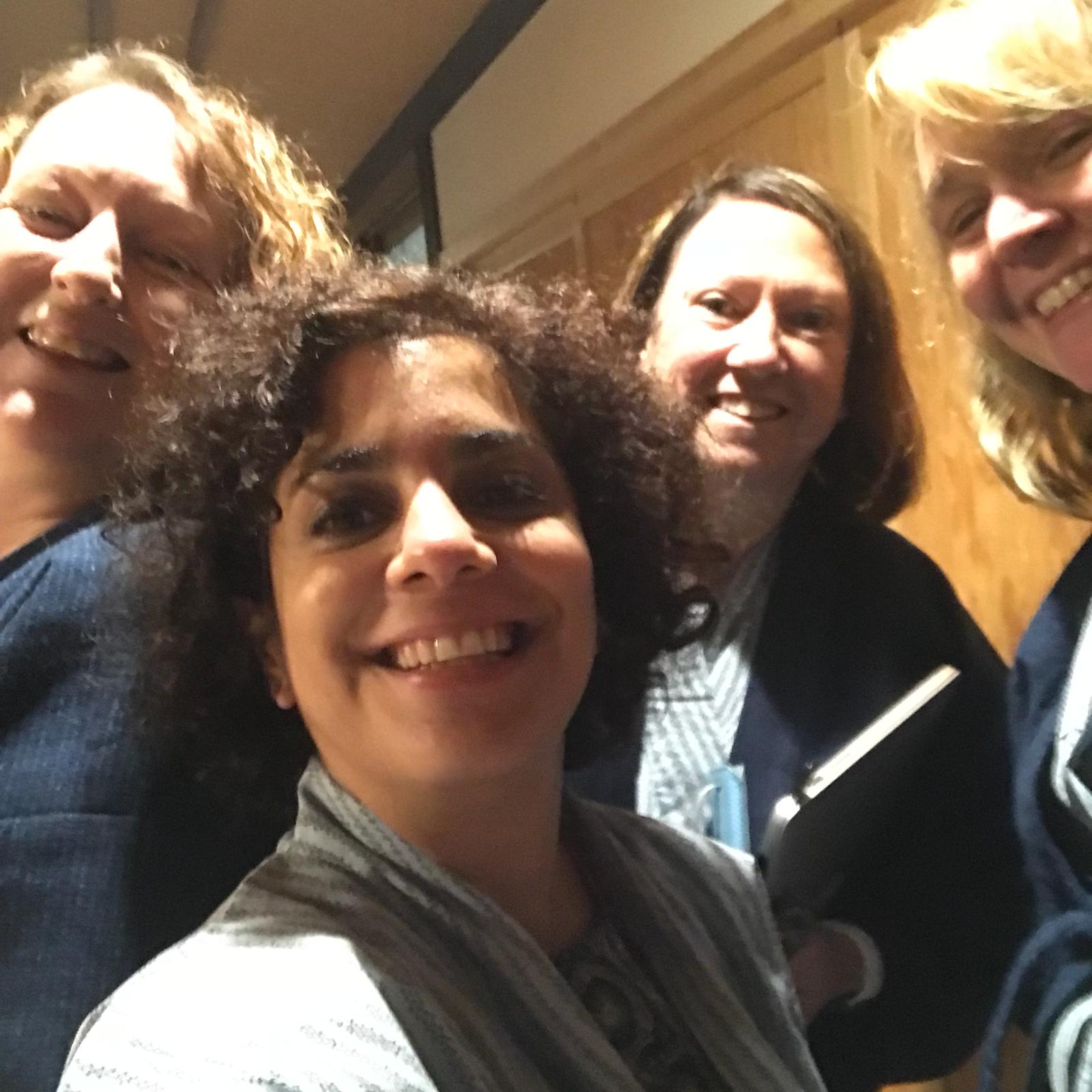
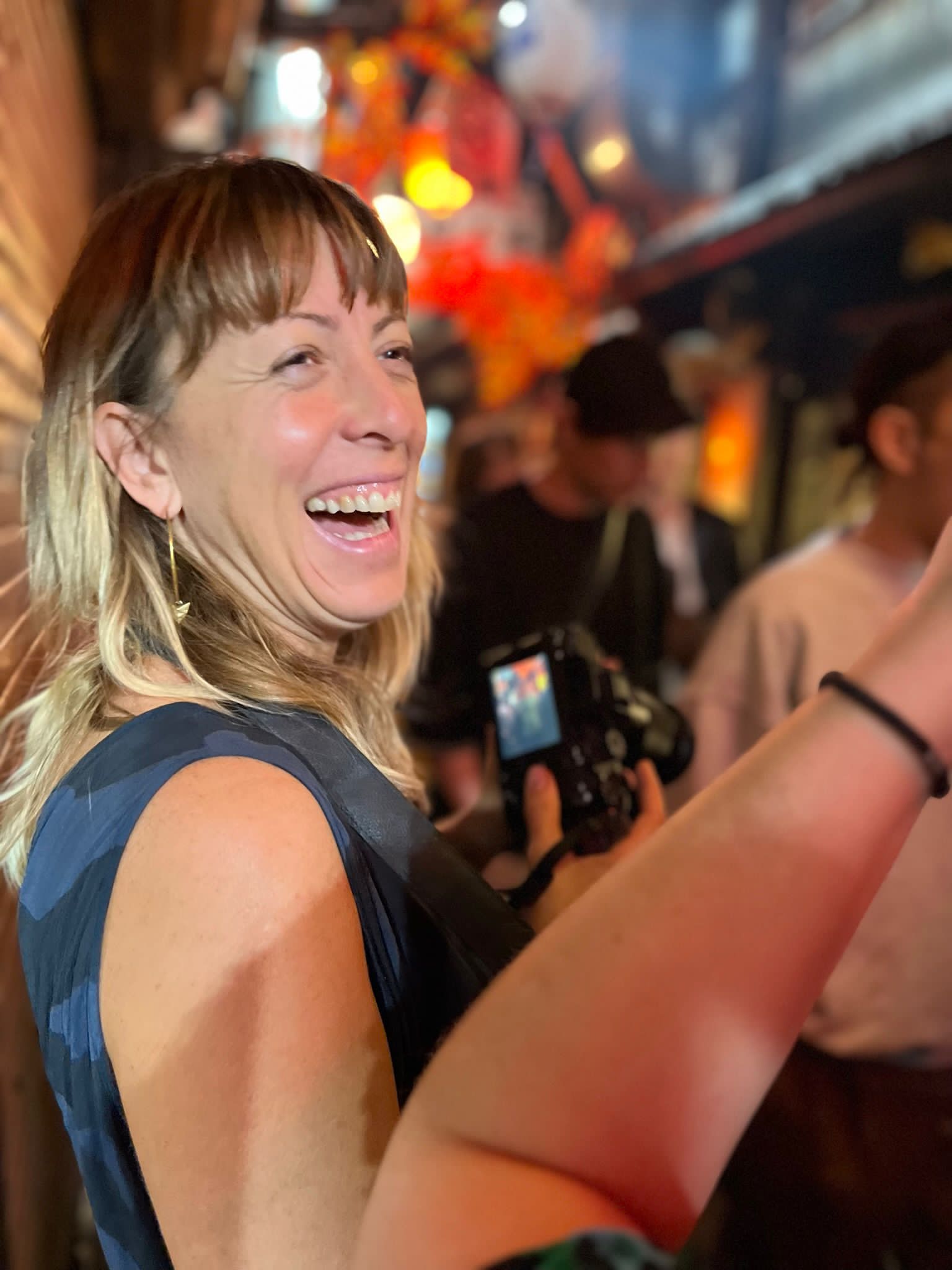
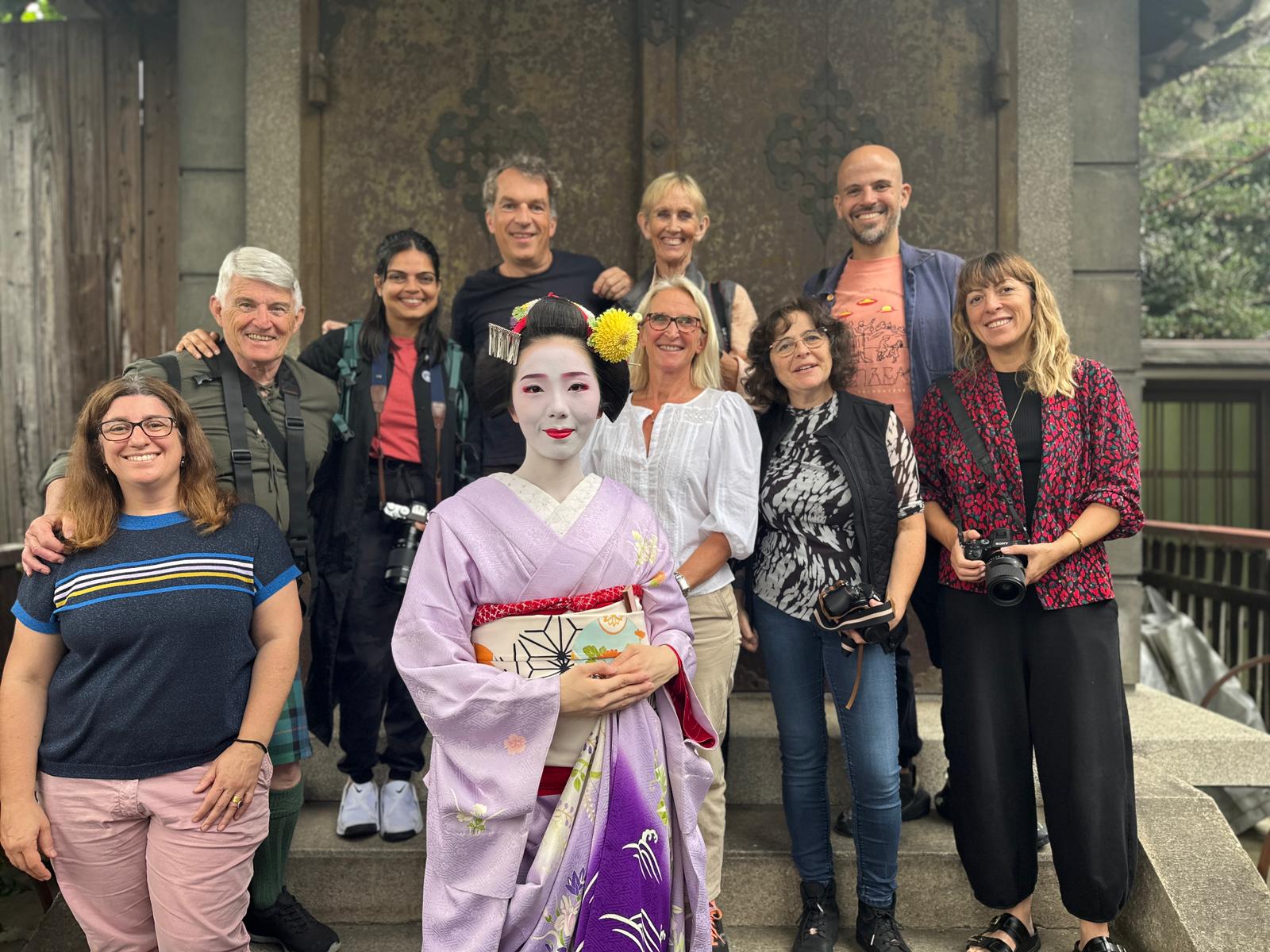
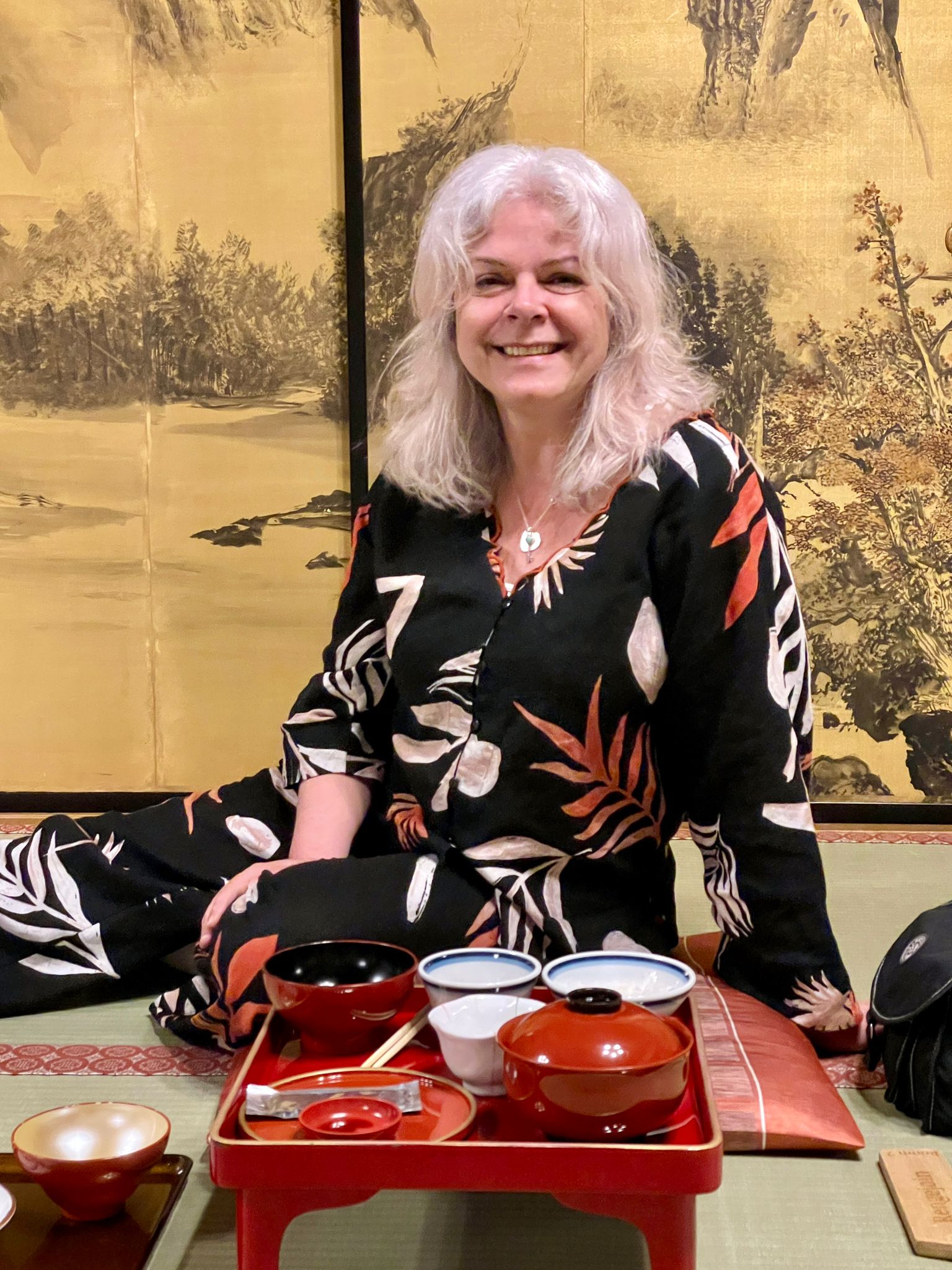
Itinerary.
Straight from the plane to a boutique hotel in eastern downtown, where old Edo sits quietly inside modern Tokyo. Your guide spends a few minutes with you one to one before anything else. Phone or camera, it doesn’t matter. By the time you walk into your first experience, using it feels natural.
Day 2. Through fashionable Harajuku – into the cedar forest of the Meiji shrine, where on Saturdays a Shinto priest leads wedding processions through the trees in the middle of a city of 14 million people. Contrast to the energy of Shibuya crossing at dusk, 3,000 people moving in every direction at once. Then up to the 52nd floor of the Park Hyatt, a cocktail, and the view that Bill Murray was staring at. Tokyo earns its reputation.
Senso-ji in the morning. Tokyo’s oldest temple, a five-storey pagoda, trails of incense smoke, the city suddenly quiet around it. We picnic in the grounds. It sounds like a small thing and feels like the best part of the day.
In the afternoon, Akihabara. Electronics stacked floor to ceiling, anime subcultures spilling onto the street, gyaru in platform boots and leopard print who have been dressing this way since the nineties and see no reason to stop. A completely different Tokyo.
Kabukicho at night, then Golden Gai. A maze of tiny bars that has been here since the fifties and looks like it knows something the rest of the city doesn’t. Find a stool. Order something cold. You won’t want to leave.
Out of Tokyo and into a different world. The air clears within an hour of leaving the city and by the time you arrive you can feel the difference. The hotel has a top floor onsen fed by natural hot springs, with panoramic views of the volcano. That alone is worth the journey.
At dusk we head to a spot most visitors never find. No crowds, no coaches, just the volcano turning amber as the sun drops behind it. One of those moments you don’t photograph straight away because you want to actually see it first.
We’ll be back at dawn. Same spot, completely different Fuji. A sacred volcano in the early light looks nothing like it does at dusk. You’ll want both versions.
The morning belongs to Tenzan Onsen. Seven natural spring pools set into a cedar valley above a river, dark wood and stone, the water fed directly from the ground. Optional. Alternatively, the valley itself is worth a wander. It’s all you time, after all.
Then south into the mountains. Koya-san was founded 1,200 years ago as the birthplace of Shingon Buddhism and sits on a plateau surrounded by eight peaks. It arrived at a certain atmosphere somewhere around the 9th century and has seen no reason to change it since.
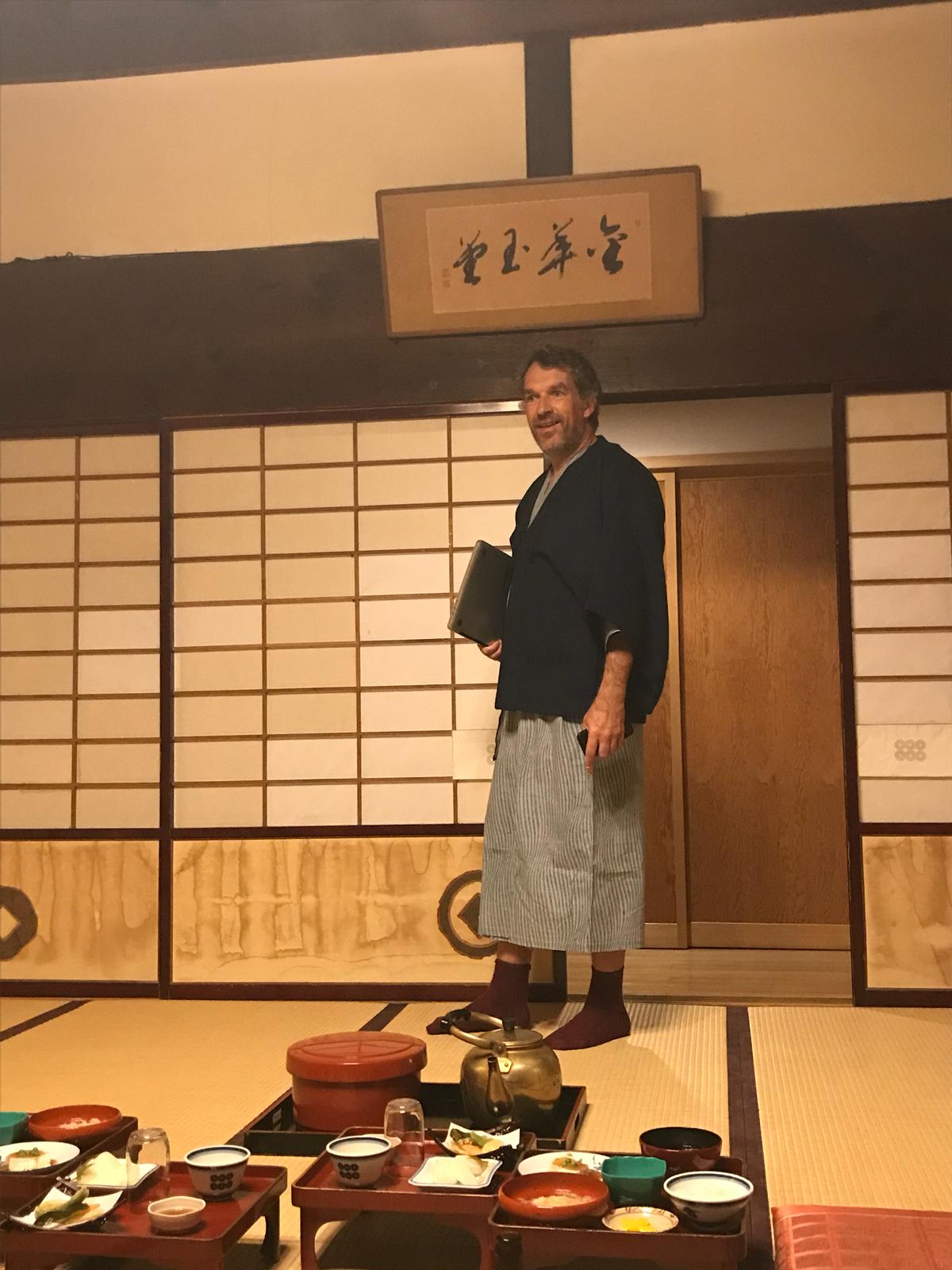
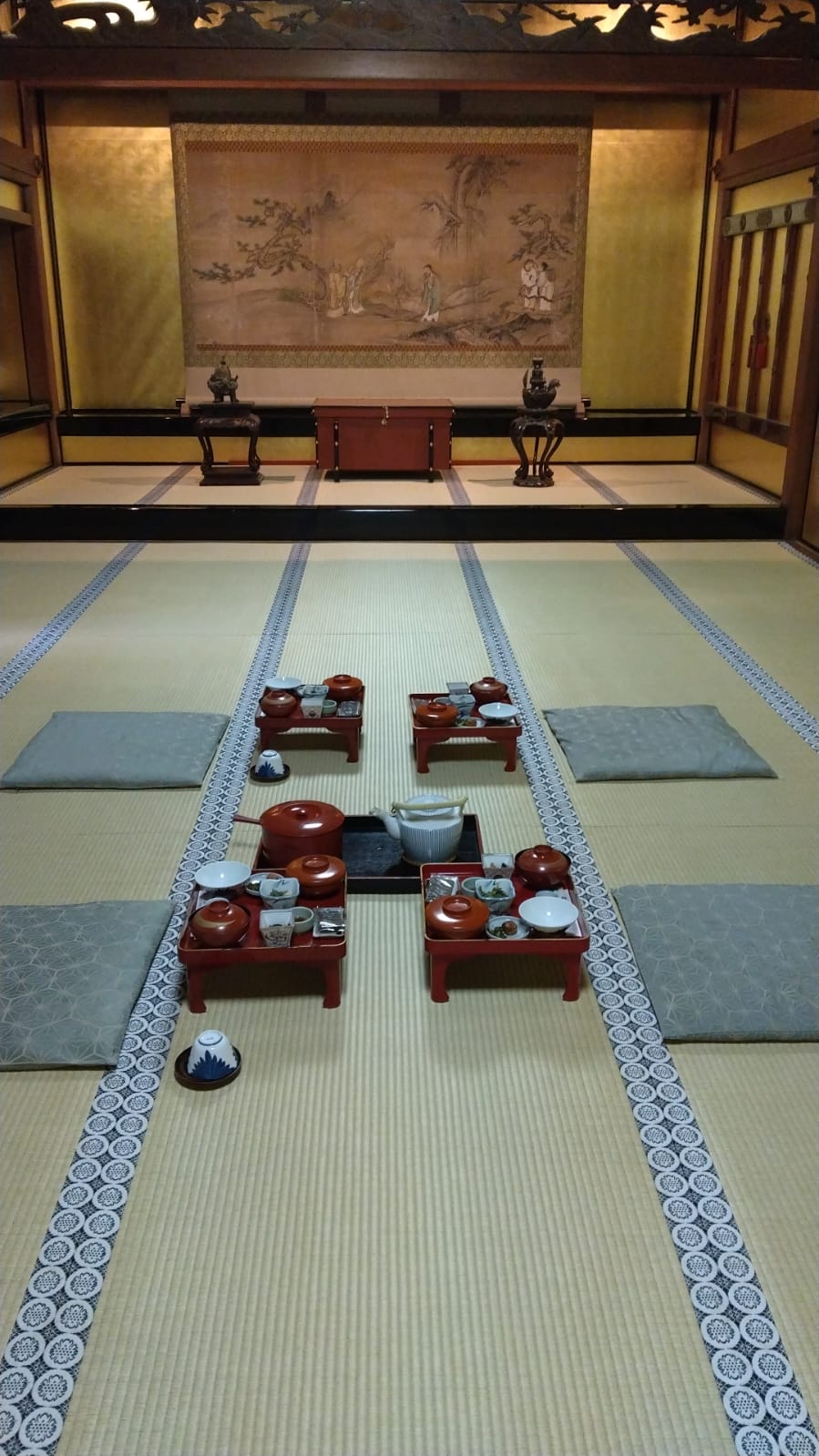
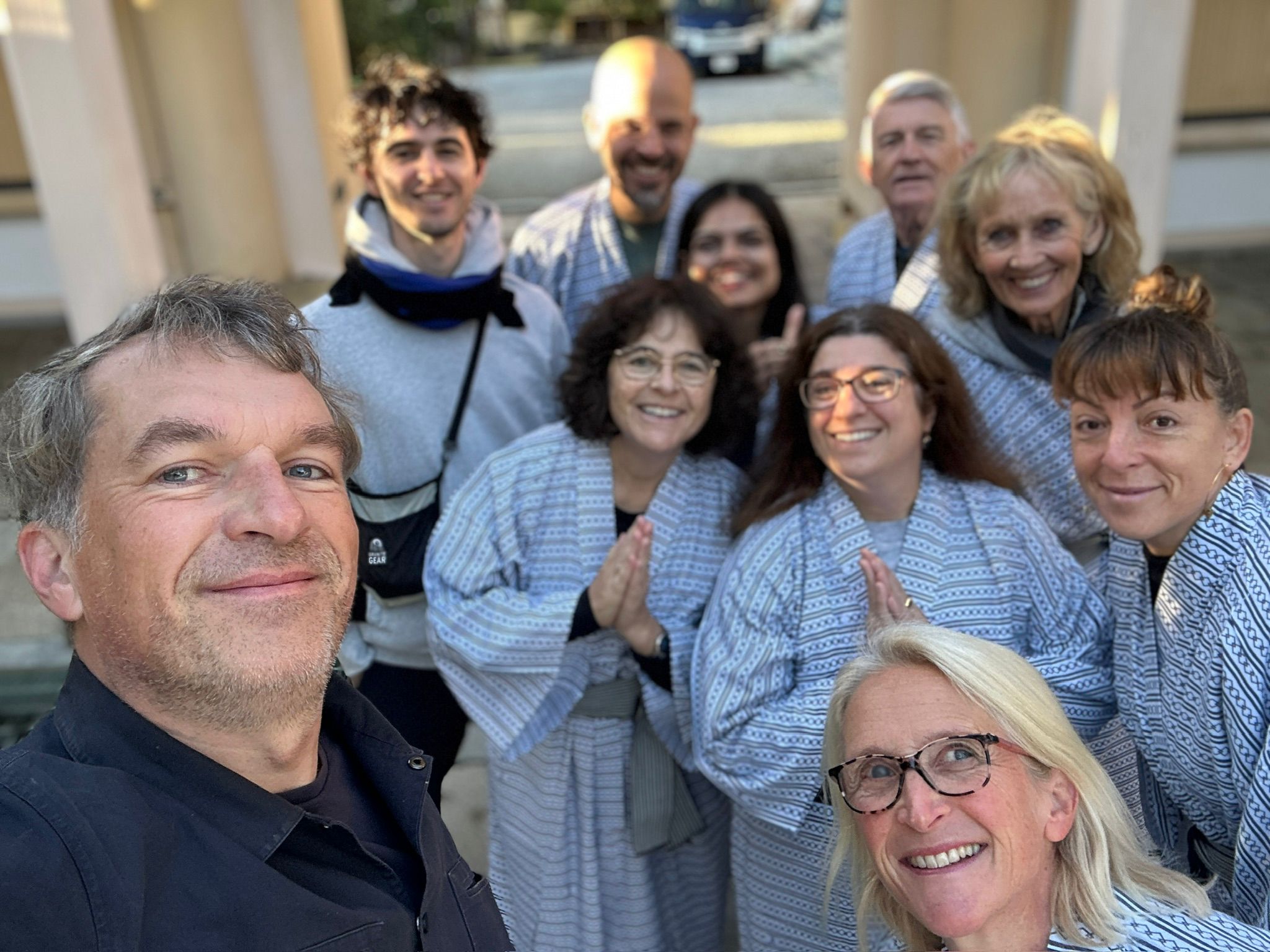
We check into a shukubo, a working temple. Dinner is a multi-course shojin ryori, the vegetarian cuisine of Buddhist monks, served in the great hall on lacquerware trays. Then, after dark, we walk into Okunoin. Two kilometres of softly lit stone lanterns through ancient cedar forest, the cedar trees rising into the night sky above you, the moon somewhere behind them. Ahead, at the end of the path, a glow. Ten thousand lanterns burning around the mausoleum of Kobo Daishi, lighting up the forest from the inside. The rest is complete darkness. Buddhist tradition holds that Kobo Daishi is not dead but in eternal meditation, and monks still bring him meals twice a day. Late at night with nobody else around, it is one of the most extraordinary walks in Japan. Some things are hard to explain afterwards. This is one of them.
Up before dawn. The morning offering to Kobo Daishi is carried through the cedar forest in the pale early light, soft colours where last night there was fire and darkness. A complete contrast, and worth getting up for.
Then the Goma. The Shingon fire ceremony has been performed here for over 1,200 years and exists nowhere else in Buddhism. You write your wishes on a wooden stick. Inside a small wooden temple, the priest feeds them into a sacred fire as the monks chant and the drums build. The flames rise. The smoke carries your wishes upward. Afterwards you meet the monks. It is the kind of thing that stays with you whether you are religious or not.
The rest of the morning is yours. Koya-san has over 100 temples on a plateau in the mountains and most visitors only see a fraction. Wander. It rewards the unhurried.
The morning is yours. Join the monks for the dawn chanting in the temple if you want it, or take the extra hour. Either way, we meet for coffee at Bon On Shya. Véronique and Takeshi have been running this place for years, espresso and homemade cakes in a room that feels like someone’s home, which is more or less what it is. The ceramics on the walls are local. The cakes change daily. The kind of place where you take your shoes off, sink into a book, and lose track of time entirely.
Then north to Kyoto. Japan’s imperial capital for over a thousand years, quieter than Tokyo, more considered, a city that still moves at its own pace. We check into our boutique hotel on Shinmachi-dori, a historic street of traditional machiya townhouses just west of the city’s main drag. Calm without being remote. The kind of base that makes the next three days feel unhurried.
Arashiyama in the morning. Bamboo up to ten metres tall, the wind moving through it, one of Japan’s 100 officially preserved sounds. Occasionally you catch a jinrikisha runner speeding through the bamboo on a hand-pulled wooden cart, kimono-clad passengers in the back, the colours vivid against the green. It looks like a painting and it isn’t. Some places remind you that Japan has been doing this for a very long time.
Then lunch. A local conveyor belt sushi spot where the menu is entirely in Japanese, the robots deliver your order to the table, and there is not a tourist in sight.
In the afternoon, Fushimi Inari. Thousands of vermilion torii gates climbing a forested hillside. We leave the main trail where everyone else turns back and climb to the peak. At dusk, the colour of the gates does something the photographs don’t capture. After dark, descending through the forest alone, the gates lit against the trees, it feels like a completely different place to the one you arrived at.
Then a cocktail. You’ve earned it.
Nishiki Market first. Five hundred years old and still the beating heart of Kyoto’s food culture, the stalls running deep into a covered alleyway barely wide enough for two people. For anyone who eats, it is heaven.
Then through the backstreets of Pontocho, and on to Maruyama Park. Stone bridges over the Hyotan pond, a small waterfall on the slope above it, and Kyoto’s most famous weeping cherry at the centre. It looks like a woodblock print and it isn’t.
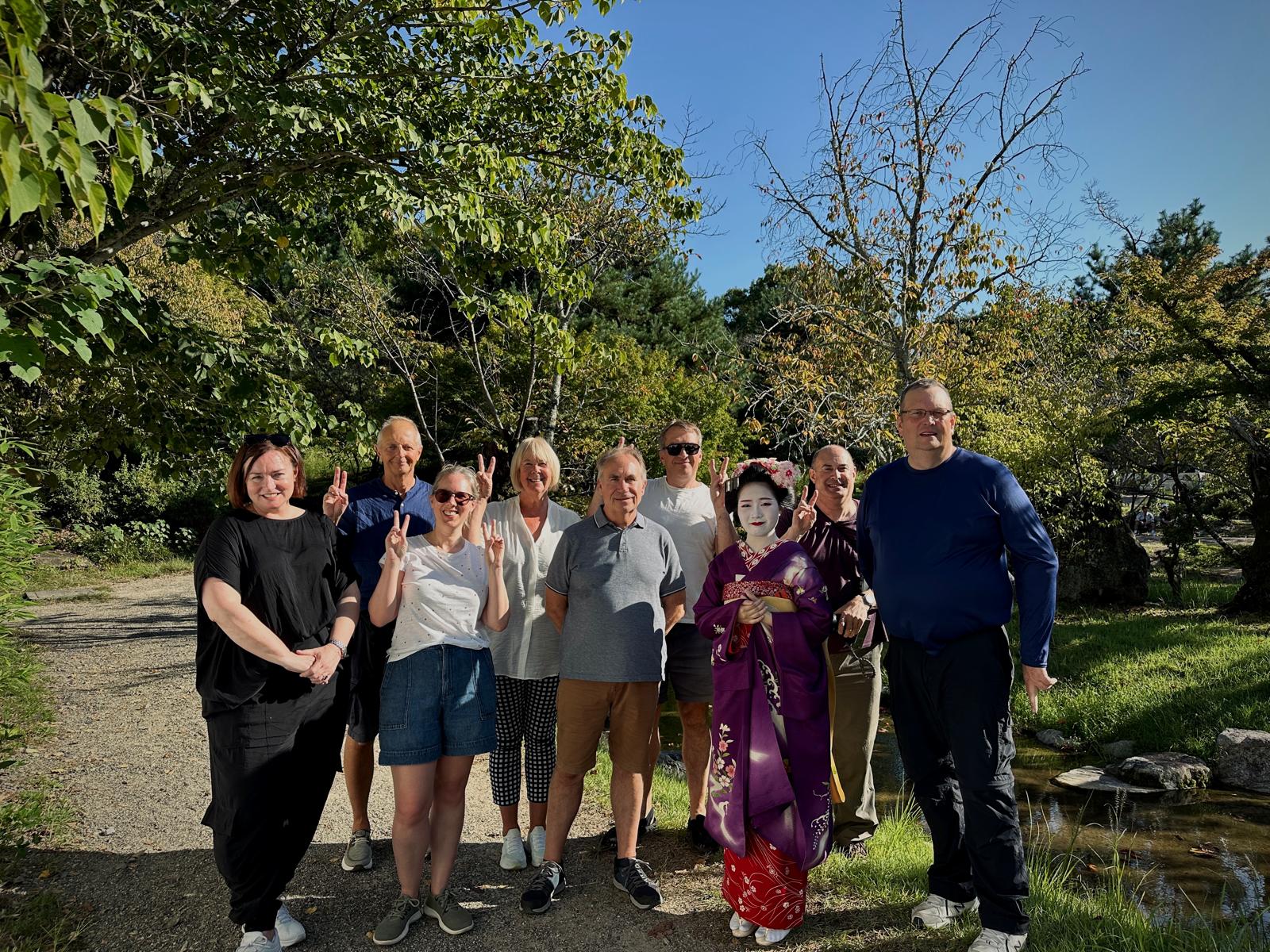
This is where the maiko arrives. There are fewer than 50 left in Kyoto now, a number that keeps falling. She is one of them. We take portraits in the park, talk through an interpreter, spend time with someone who has given her teenage years to one of the oldest traditions in Japan. It is not a tourist experience. You will know the difference.
Afterwards, into Gion. The laws have changed in recent years and Gion’s private streets now carry fines for photography without permission. We keep our distance and we respect it. But watching from the right spot, at the right hour, as a geiko moves between teahouses in the lamplight, is one of the most quietly extraordinary things you will see on this trip.
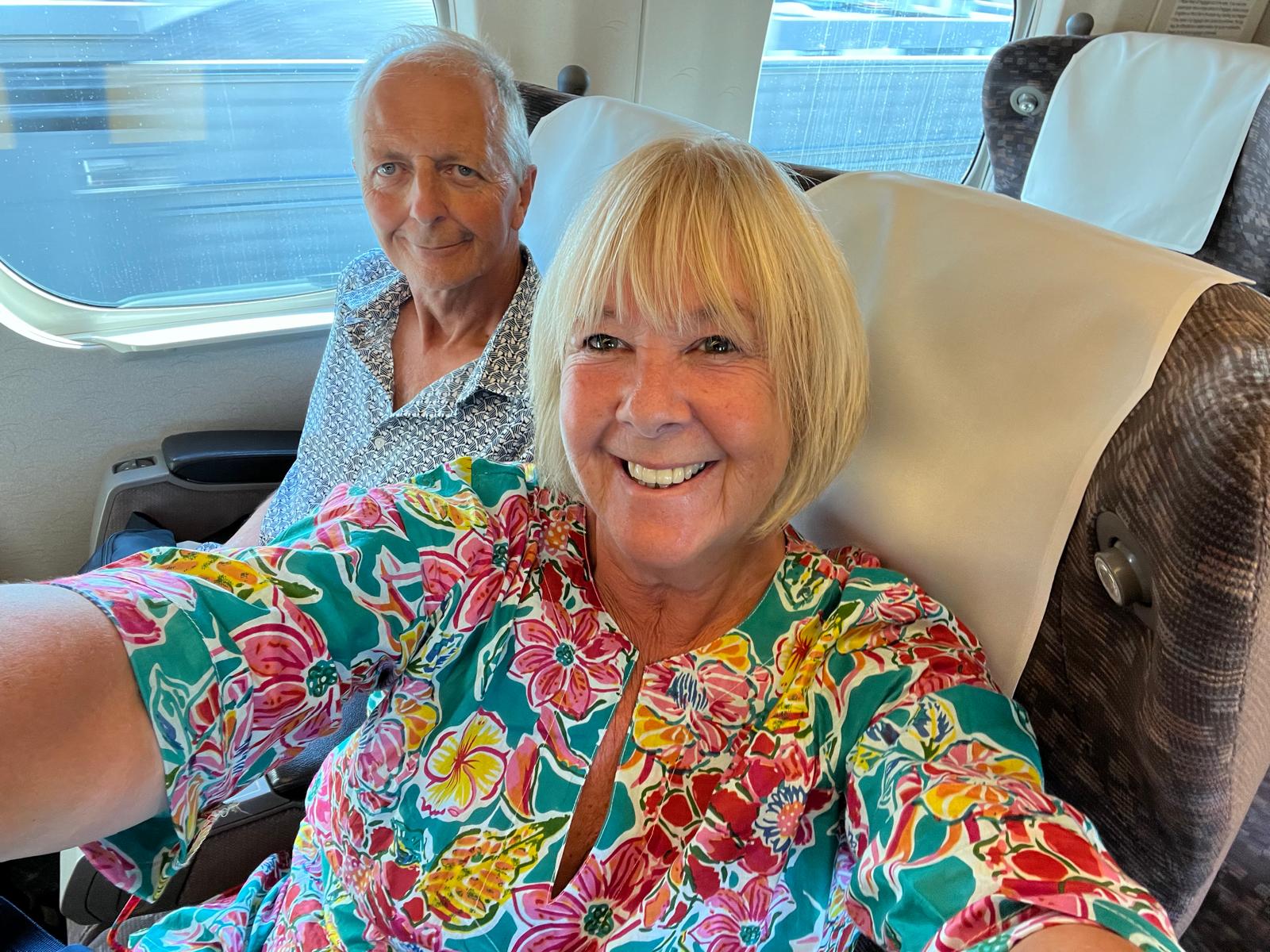
That evening, dinner together, the week’s best shots on the table, Kyoto doing what Kyoto does at night. It goes on longer than planned. It always does. The final morning. French toast and a matcha latte, some last-minute shopping, a final lunch. Most take the bullet train back to Tokyo. Fuji appears in the window one last time, brief and unhurried, as if it knows you’re leaving. Then home. Not quite the same person who arrived.
Dates & Prices.
16 – 25 October, 2026 (1 left)
21 – 30 May, 2027
15 – 24 October, 2027
10 days. 9 nights. Starts in Tokyo and ends in Kyoto.
£4475 / £380 single supplement
Price includes
9 nights boutique accommodation at listed hotels (or similar)
10 days guided by our UK-based pro photographer
1-to-1 photography guidance, your pace, your level
Portrait shoot with a Maiko, a Geisha apprentice
Group transfers from the airport on suggested flights
All transportation between shooting locations
All entrance passes to Temples & National Parks
Price excludes flights & meals(except Koyasan).
Direct flights to Tokyo Haneda from the UK with British Airways, JAL and All Nippon Airlines, with prices from around £500. We recommend arriving into Haneda around midday on day one so you start the trip with a full afternoon. On the final day, there are evening departures that get you home overnight. British Airways flies the following morning, so some guests choose to stay near the airport and make the most of a full last day in Kyoto before heading out.
The trip ends in Kyoto. You can fly home from there, or take the bullet train back to Tokyo for around £70 one way — one last glimpse of Fuji from the window before you go.
One important thing to know before you book flights: we confirm the trip once minimum numbers are reached. We will contact you as soon as that happens and suggest the best flight options at that point. Please do not book flights before we confirm. We know that feels like an extra step. It protects everyone.
One@Tokyo
Designed by cult architect Kengo Kuma, where the old Edo quarter meets the shadow of Tokyo Skytree. One of Tokyo’s more architecturally interesting places to sleep.
Hotel MyStays Fuji Onsen
Natural hot spring onsen on the top floor with Fuji filling the window. The volcano looks different every hour. Worth waking up early for.
Mitsui Garden Shinmachi
Modern, slick Japanese hotel within moments of all the action, with amazing interior design and onsen with sparkling water.
Fukuchi-In, Kōya-San
A working templestay on a sacred mountain, famous gardens, hot spring baths in cedar forest, and dinner that monks have been perfecting for 1,200 years.
This trip to Japan has been planned for 5 years and various things got in the way. As a result I had built up my expectations and was not disappointed at all. [You] get access to experiences that, as an individual traveller, just wouldn’t be possible. AP, London
Nepal
NEPAL PHOTOGRAPHY TOURS
Few places on earth fascinate and capture the imagination more than Nepal. This vibrant, breathtaking country offers a rich canvas on which to further develop your passion for photography – on our 10-day Nepal Photography Tour.
With daytime temperatures averaging 26c, its the perfect time of year to escape to the Himalayas and immerse yourself in the spectacular landscapes of Pokhara and Kathmandu – taking time to snap portraits of sadhu holy men, enjoy a private shoot with a living goddess, explore the myriad medieval streets of Bhaktapur, plus tour the lush forests by open top jeep in Chitwan National Park, capturing tigers, rhino and elephants.
Experience unforgettable nights in authentic Nepali hideaways, mountain view retreats and boutique luxury hotels, using every imaginable mode of transport, from planes to rickshaws to good old-fashioned hiking boots.
share
“These guys have got it right. Tuition seems effortless, even the most hardened luddite of the group grasped each of the lessons straight away. Before you know it, you realise that you have the ability to take any photographs in any situation. And that feels good. Throw in top hospitality and plenty of socialising makes this two-thumbs up”.
HORDALAND FOLKEBLAD
Highlights.
Nepal is a colorful jumble of pagoda-topped temples, ornate religious monuments, carved wooden Newari architecture, chaotic streets, and majestic mountains. The country is home to ten UNESCO World Heritage Sites and is bursting at the seams with cultural and natural wonders. A few monuments are still under repair, but their stories of rival kingdoms, mythical deities, and spiritual devotion are unchanged.
The Kathmandu Valley includes the ancient cities of Kathmandu, Patan, and Bhaktapur, each with its own Durbar Square of courtyards, royal palaces, and temples from the 12th to 18th centuries. Dotted around this cultural collage are superlative religious sites— like Boudhnath, a giant white dome that is Nepal’s largest stupa and centre of Tibetan Buddhism. Nestled in a lush valley northwest of Kathmandu, Pokhara lulls with lakeside charm and a jagged, snowcapped Annapurna backdrop. Further south, the steamy subtropics of southern Nepal cradle Chitwan National Park, a UNESCO World Heritage site that’s home to 68 species of mammals, 544 species of birds, and 556 species of reptiles and amphibians.
The best thing about Nepal is there’s always another adventure.
Craft dusk vistas of Boudhnath stupa, the holiest Tibetan Buddhist temple outside Tibet.
Attend a private portrait shoot of the Kumari, a living goddess in the ancient royal city of Patan – not available to tourists.
Shoot the endless ranges of the snowcapped Himalayas, from 20,000 feet.
Snap tigers from the back of a 4×4 Landrover in Chitwan National Park.
Try out intimate portraits of the Tharu tribe, in the local long house.
Capture the Annapurna region, from a walk designed for Prince Charles.
Photograph gurkhas and sadhu holy men on pro guided shoots.
Document the incredible architecture of Kathmandu, Patan and Bhaktapur
Nepal Photography Tour Itinerary.
Fresh off the overnight flight, we’ll whisk you over to our luxe bolthole – Babar Mahal Vilas – the former home of the Nepalese PM – and chance to have welcome drinkies with the team who’ll be escorting you on your 10-day Nepal Photography Tour.
After a restful nights sleep, we’ll dive right into the basics of photography, getting you up to speed with that tricky looking (but not really when you know how) digital camera – SLR. mirrorless or cameraphone, then take you to the magical Boudhnath stupa, steps from the hotel.
Here, we’ll take the first of many spectacular shots (supported at all times by our attentive tutors), then get a private blessing in a 16th century temple overlooking the stupa, before sunset drinks with a dramatic view over the city.
Next morning, we’re up early to take an optional mountain flight over the snowcapped Himalayas – chance to fly directly over Everest in planes with oversized windows; the views are out of this world. Back at base, we’ll have a look through some of the most famous images taken in Nepal, and analyse some of the styles so we can try out for ourselves.
We’ll also equip you with a handful of techniques to make your images really stand out, then head to the medieval city of Patan, enjoying a lunch at a local family house. We’ll then tour the ornate streets of this city, getting 1-on-1 guidance from our pros, before a private photoshoot with the Kumari, a living goddess, normally not available tourists. Later, we’ll review our images poolside under the stars; our team giving you individual feedback on your best of the day.
More spectacular views today as we head south to Royal Chitwan National Park, which covers almost a 1000 sq. kilometres of lowland Nepal. We’re here to safari – where our team will give you step-by-step guidance on the techniques of shooting killer wildlife photography. The park is one of the last refuges of the endangered one-horn Rhino, and there are sizable populations of tigers, sloth bear and wild elephants. Up early to catch the morning rays, we’ll pack our kit and take a tour through sal forest, water marshes and rippling grasslands to hunt some shots.
Later, we’ll head out in 4×4 Landrovers to explore deeper into the jungle; chance to shoot some Tigers. Later, we’ll visit the Tharu – people of the forest indigenous to the region. We’ll have drinks in a Badaghar – ‘the long house’ – chance to meet –and shoot – an ancient community first hand. Later, we’ll review our best images of the day under myriad shooting stars (we counted 40 last time!).
Today, we head north to spectacular Pokhara, to our boutique retreat with picture perfect mountain views, and a millpond calm lake on which to observe them – all in glorious sunshine. Here we’ll reveal the techniques of amazing landscape photography – running through the masters who’ve defined the genre, then deconstructing what makes a landscape great. Armed with these new found skills, we’ll take a trip the Peace Pagoda, the perfect spot to shoot the afternoon light over the Annapurna range, before taking a private row boat across the lake and our own private outdoor BBQ.
Next morning, we’ll climb up to Sarangkot, capturing the sunrise over the Himalayas – panoramic views are quite spectacular from here. Back in Pokhara, we’l meet up for lunch with some Gurkhas, fearsome Nepalese warriors with incredible tales to tell. You’ll even get chance to have a private photoshoot by the lake afterwards.
Later, we’ll have tea at the exclusive Tiger Mountain resort, then take the easy Royal Trek, designed for Prince Charles, where we’ll get incredible sunset views of the Annapurna region. Great pictures are guaranteed.
Next morning, we’ll say farewell to unique Pokhara and head back to Kathmandu, and explore the ancient royal district, trying out some street photography in the myriad backstreets. We’ll meet up with some sadhu holy men, then a private portrait photoshoot with them – before capturing the ancient atmosphere of this timeless city as light falls. Later, we’ll review our images as a group, and get individual feedback on your emerging style and skills.
On our final full day in Nepal, we’ll prepare you to shoot your final piece of work, in the magical city of Bhaktapur. We’ll give you 1-on-1 feedback, then help you design, prepare and shoot a final group of killer images for review in our pop-up exhibition later that night. The rest of the day is yours to explore the intricate and beautiful streets of this kingdom – come evening, we’ll dine outside in our final night celebration dinner, presenting our collection of images, then celebrate in style in Babar Mahal, where only the most well-to-do Nepalese hang out.
Next morning, we’ll have our final 1-on-1’s, where our tutors will give you personal feedback on your style and where to next take your photography, before boarding the plane back home, reflecting on the gentle beauty of Nepal – as close as you can get to heaven.
Details.
6 – 15 February, 2026.
10 days. 9 nights. Starts and ends in Kathmandu, Nepal.
£2880 / £395 single supplement
Price includes
9 days boutique accommodation at listed hotels (or similar)
10 days tuition from our UK-based professional photographer
Safari in Chitwan National Park, with guide
Private photoshoots with the Kumari, Gurkhas & Sadhu
All transfers to and from the airport from suggested flights
All transportation to shooting locations
All entrance fees to parks, monuments and temples
Boat ride on Phewa Lake
Multiple 1-on-1 tuition sessions
Price excludes flights & meals.
There are no direct flights into Kathmandu. Fly into Dubai, Doha or Delhi, perfect for a few days explore – then it’s a short hop from there. Prices start at around £500. Internal flights are around $100.
Once minimum numbers are met, we will recommend the best international flights based on duration and Skytrax rating.
"Quite simply one of the best things I have ever done."
Paul Goodhead, Manchester
Cambodia
Come for Angkor. Leave wondering why nobody told you about the rest.
Angkor at first light – before the coaches arrive, while the air still smells of incense and the stones are cool – is one of those moments you know you’ll describe badly to people back home. Your photo does it more justice.
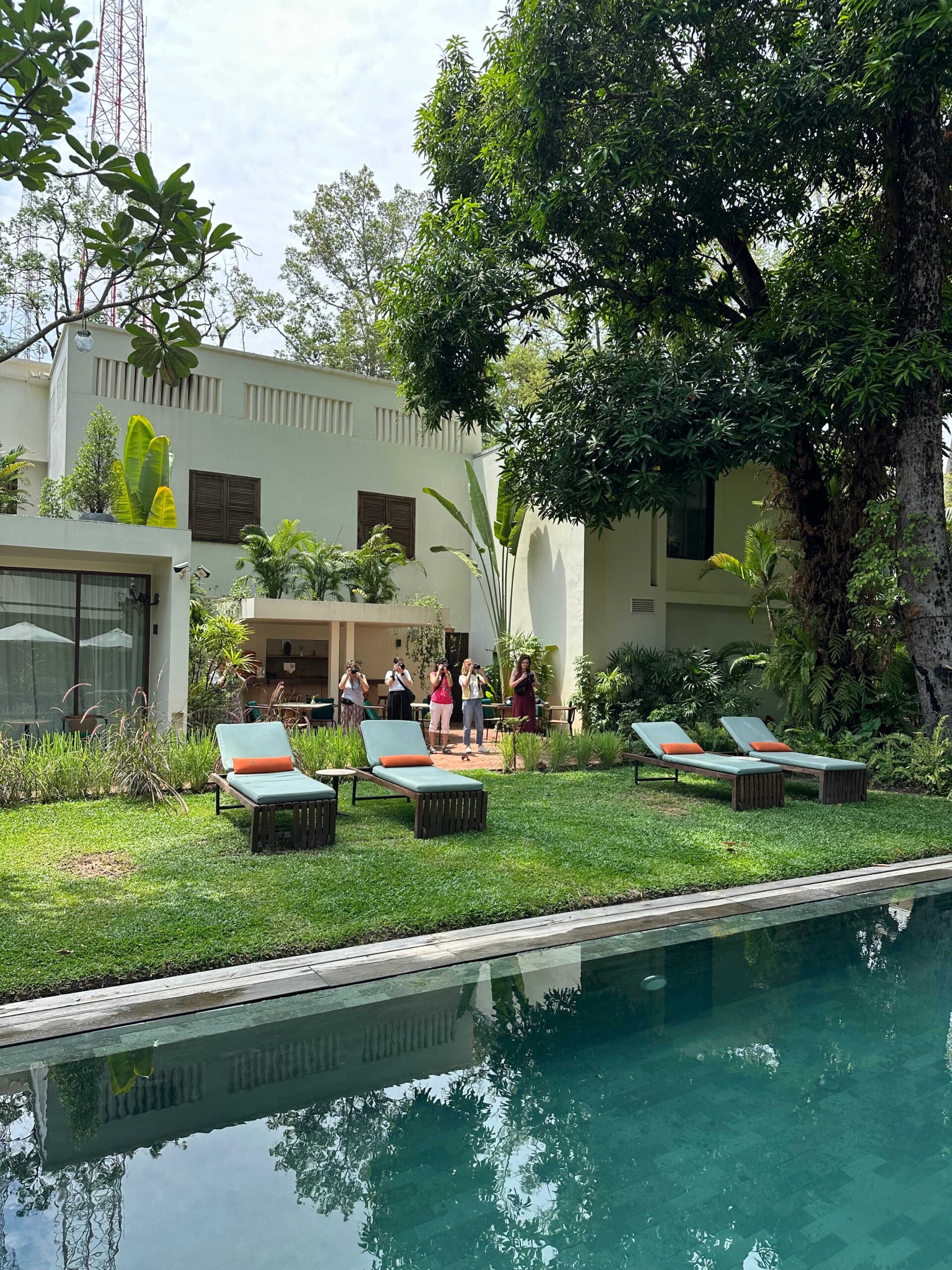
Siem Reap is the base. Small, surprising, reeks of history. The hotel is a converted French governor’s mansion with a pool that earns its keep in the afternoons. Ten days, and there’s a lot in them – temples at dawn, a floating village, monks at prayer, a circus troupe who let us backstage. Small group, good hotels, most guests on their own. The camera travels with you. Sometimes it’s the thing that gets you closer.
WEATHER
23 - 33°C
DURATION
10 DAYS
DEPOSIT
FROM £697
GROUP
CURIOUS ADULTS
GROUP SIZE
MAX 10
DOWNTIME
BALANCED
HOTEL
BOUTIQUE
PHYSICALITY
ACTIVE
share
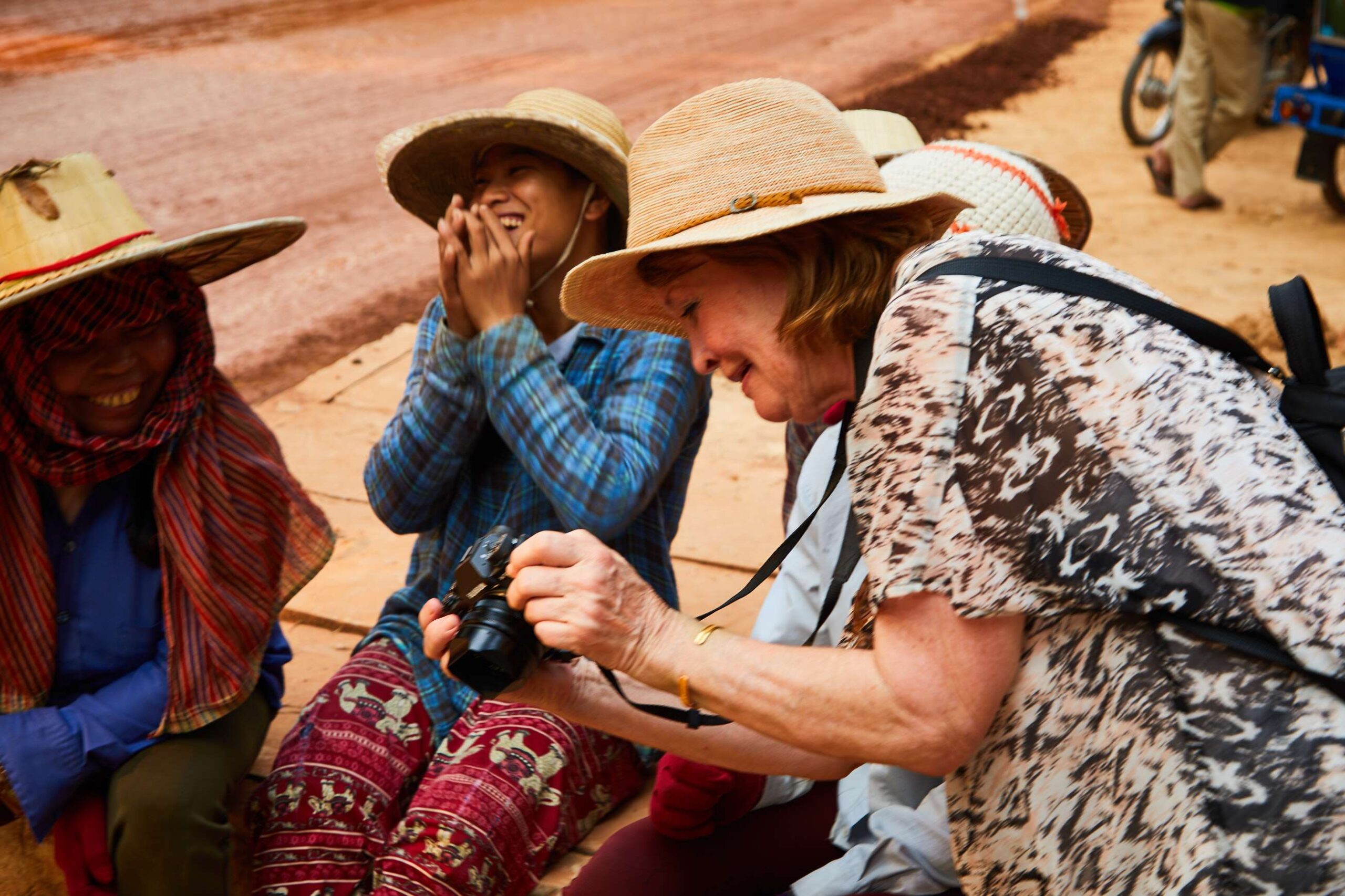
Ta Prohm at dawn, before anyone else arrived – the trees consuming the old stones, completely quiet. The canoe ride through the mangroves was one of the most peaceful hours I’ve spent anywhere. I came home with a stack of photographs and a genuine fondness for Cambodia and its people. Mike, Winchester
Highlights.
Behind the Scenes.
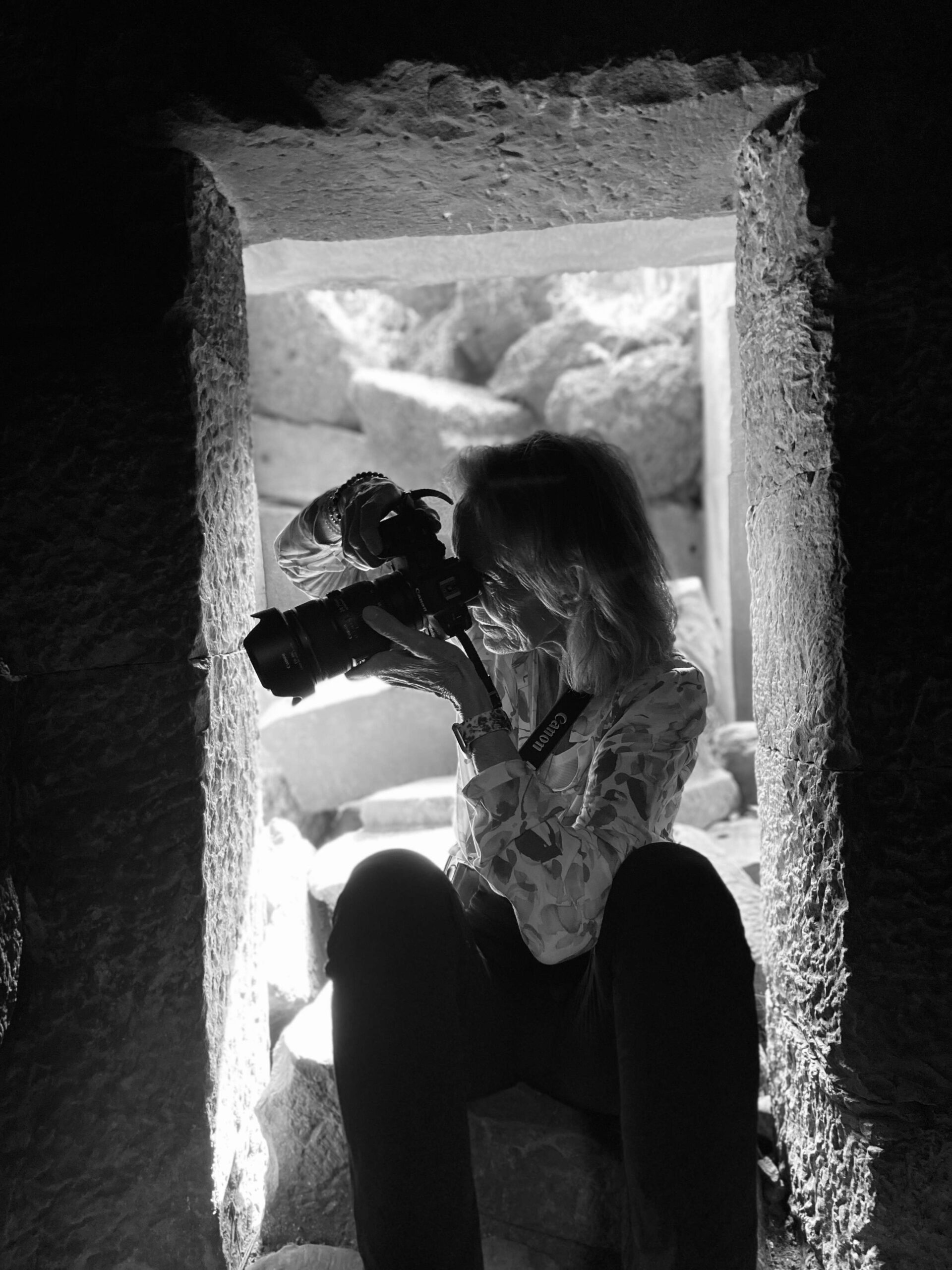
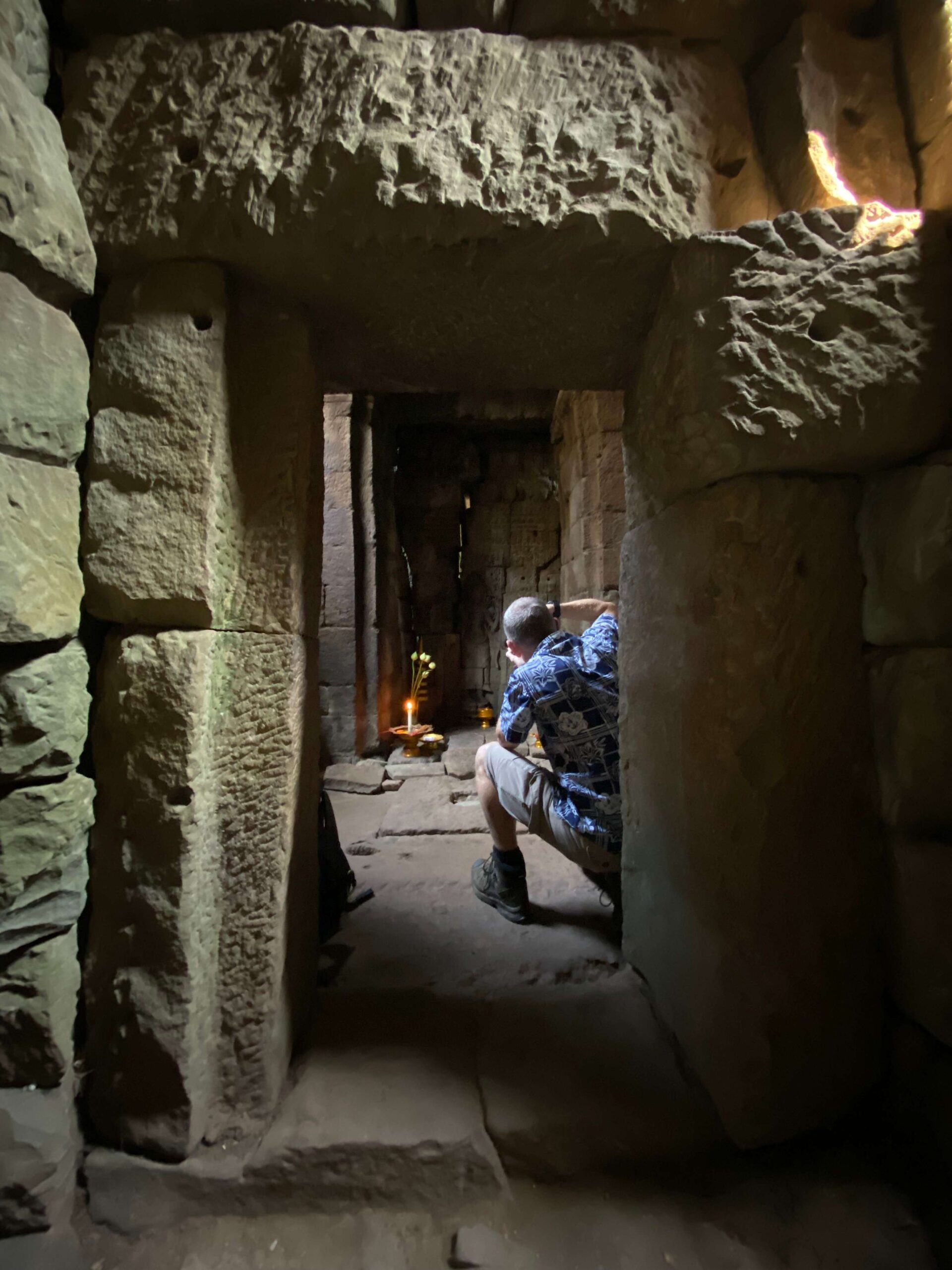
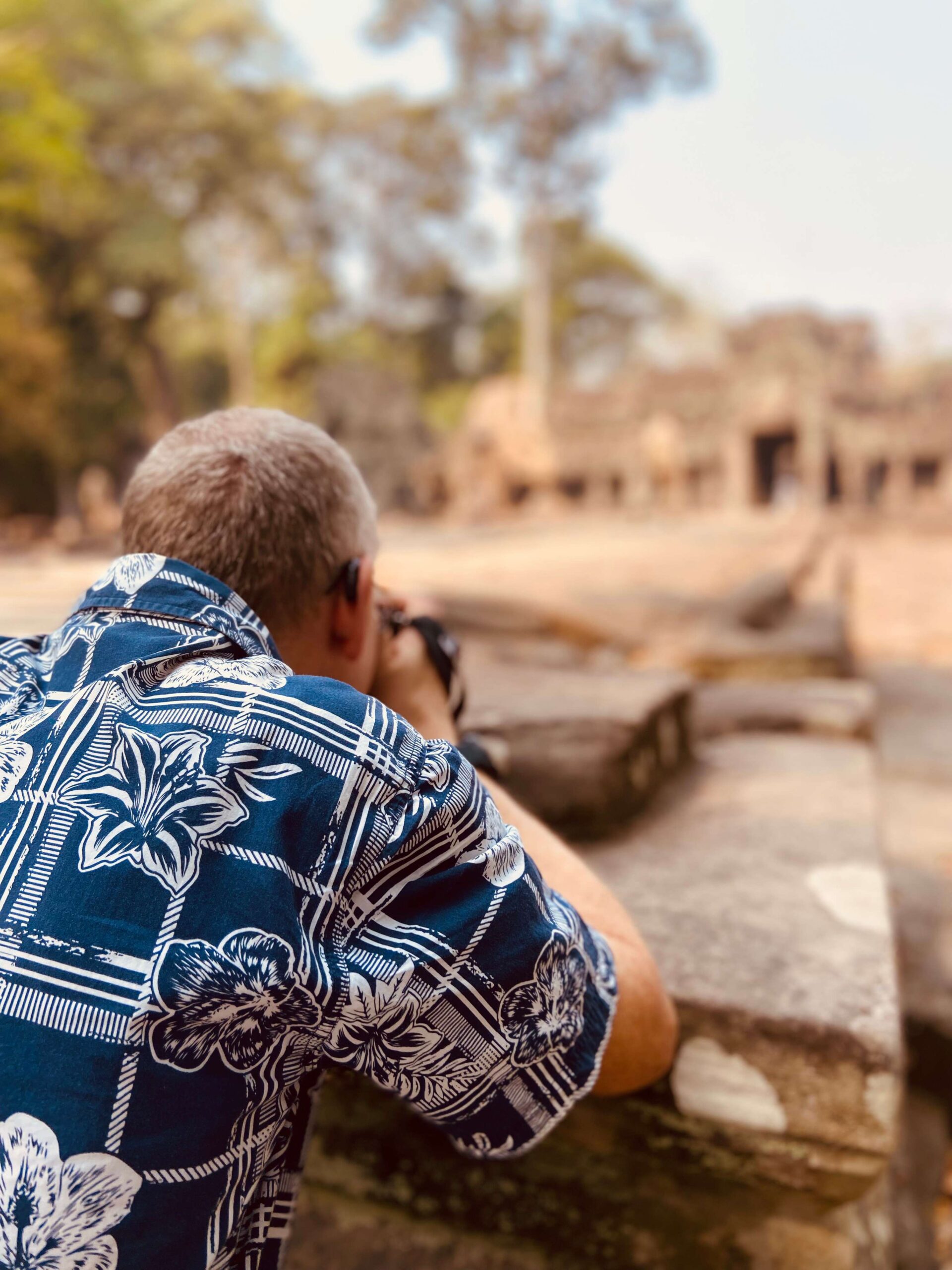
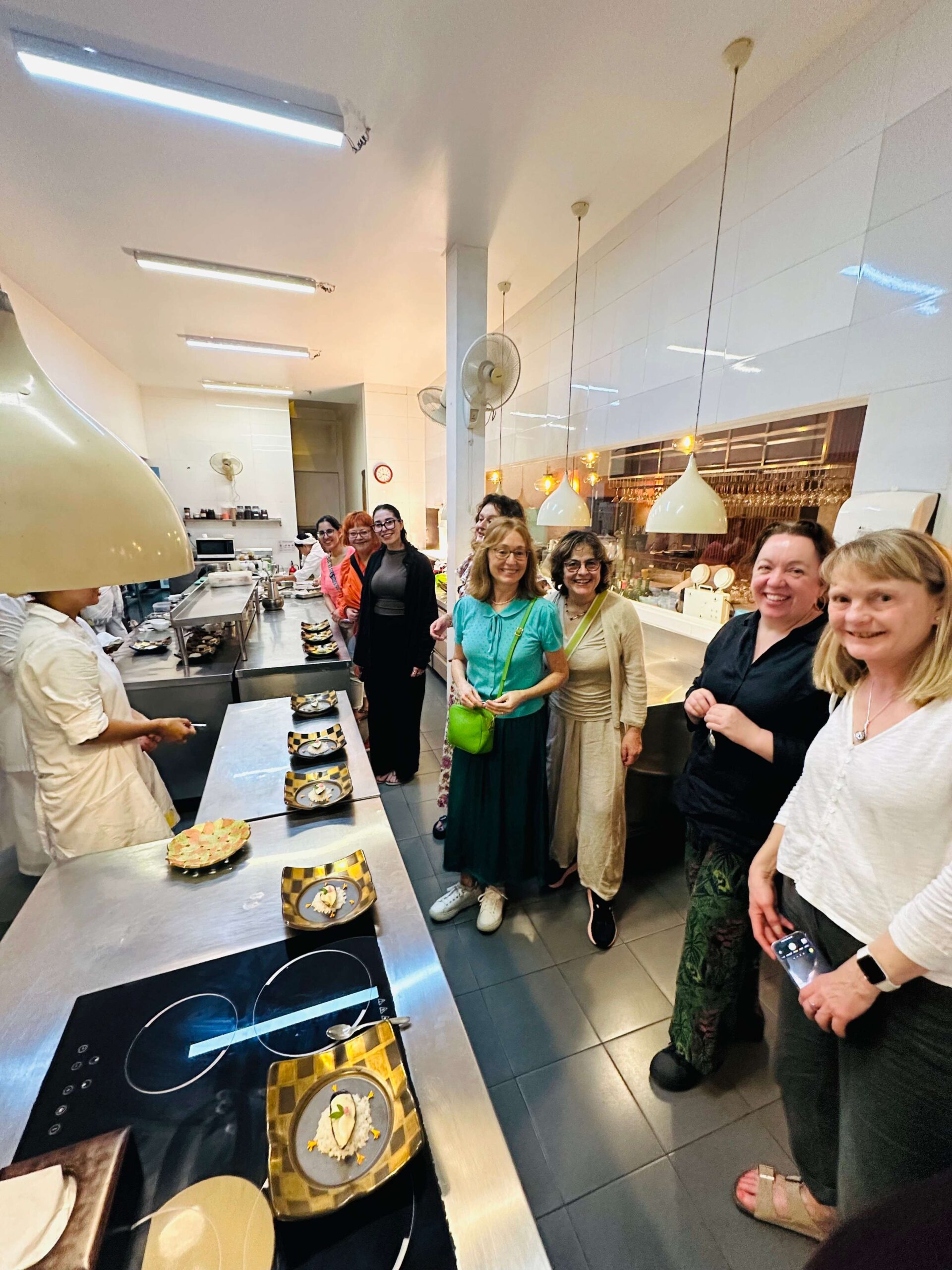
Itinerary.
The flight lands, you clear the airport, and twenty minutes later you’re on the balcony of a converted French governor’s mansion with a drink in your hand. That’s the pace for the rest of the day.
Your guide finds you before the first experience – a few minutes one to one, just to settle what you want from the trip and get comfortable with whatever you’re shooting with. Then into Siem Reap. The old quarter, the river at dusk, Wat Phnom in the late afternoon light.
That evening, dinner at Cuisine Wat Damnak – on Asia’s 50 Best Restaurants list, five courses for £33, in a traditional wooden house. One of those meals that makes you question every other restaurant you’ve ever been to.
You leave mid-morning, after the coach parties have done the sunrise and gone home for breakfast. The bas reliefs first – eight hundred metres of carved stone narrative running around the outer gallery, battles and gods and processions that take as long as you want to give them. Then up. The central sanctuary, the Bakan, sits at the top of steps steep enough that most visitors don’t bother. Up there it’s almost entirely Cambodians: monks in saffron, and women in white – devout lay Buddhists who come here to pray, not to look. The views across all two hundred square kilometres of the complex are, frankly, absurd.
Back in the afternoon. Time by the pool, the spa if you want it. A good way to start a holiday.
Day 3 is spent getting properly under the skin of Siem Reap. The city has more going on than most people give it credit for: colonial architecture, a thriving arts quarter, workshops where traditional Khmer crafts are still being made by hand.
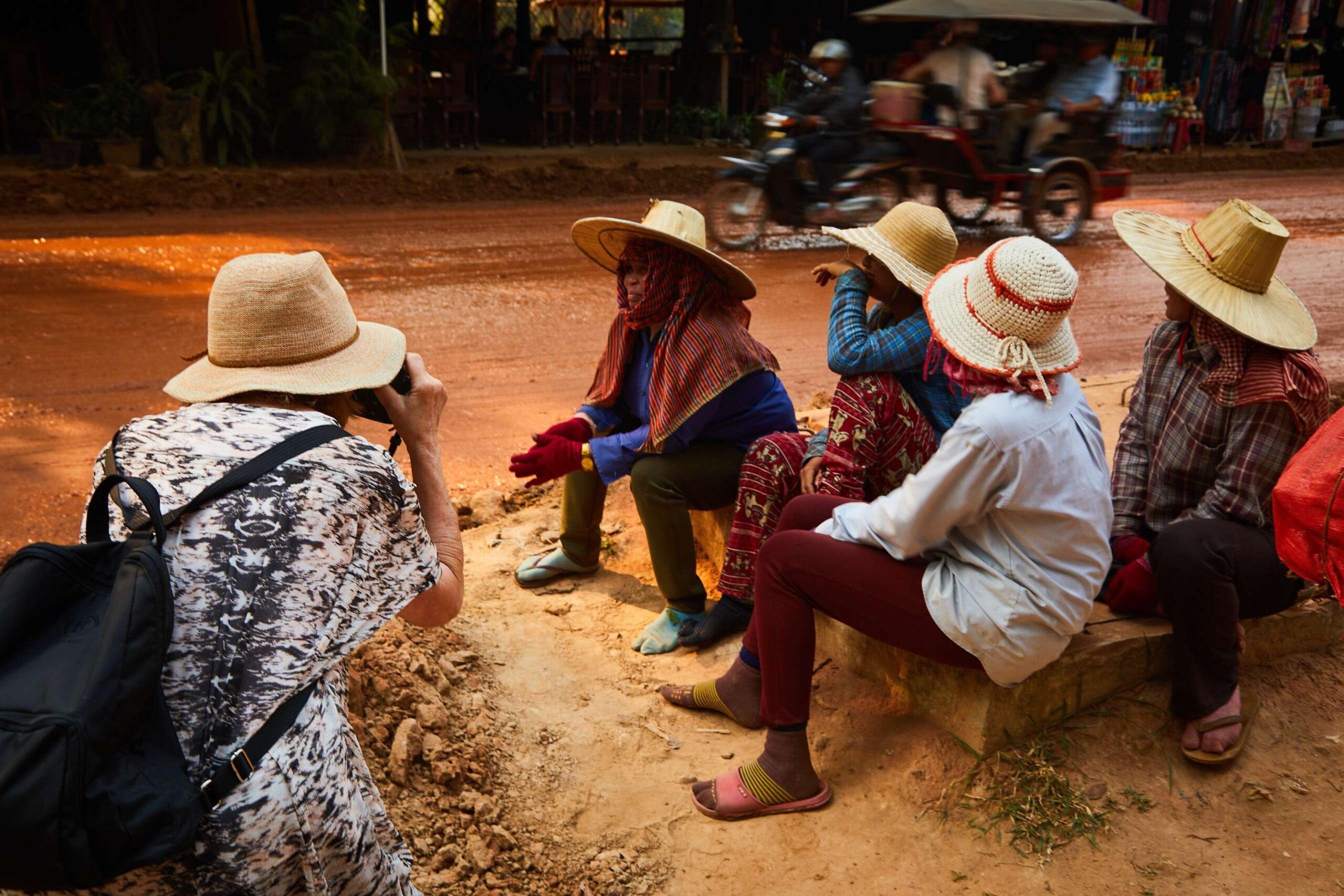
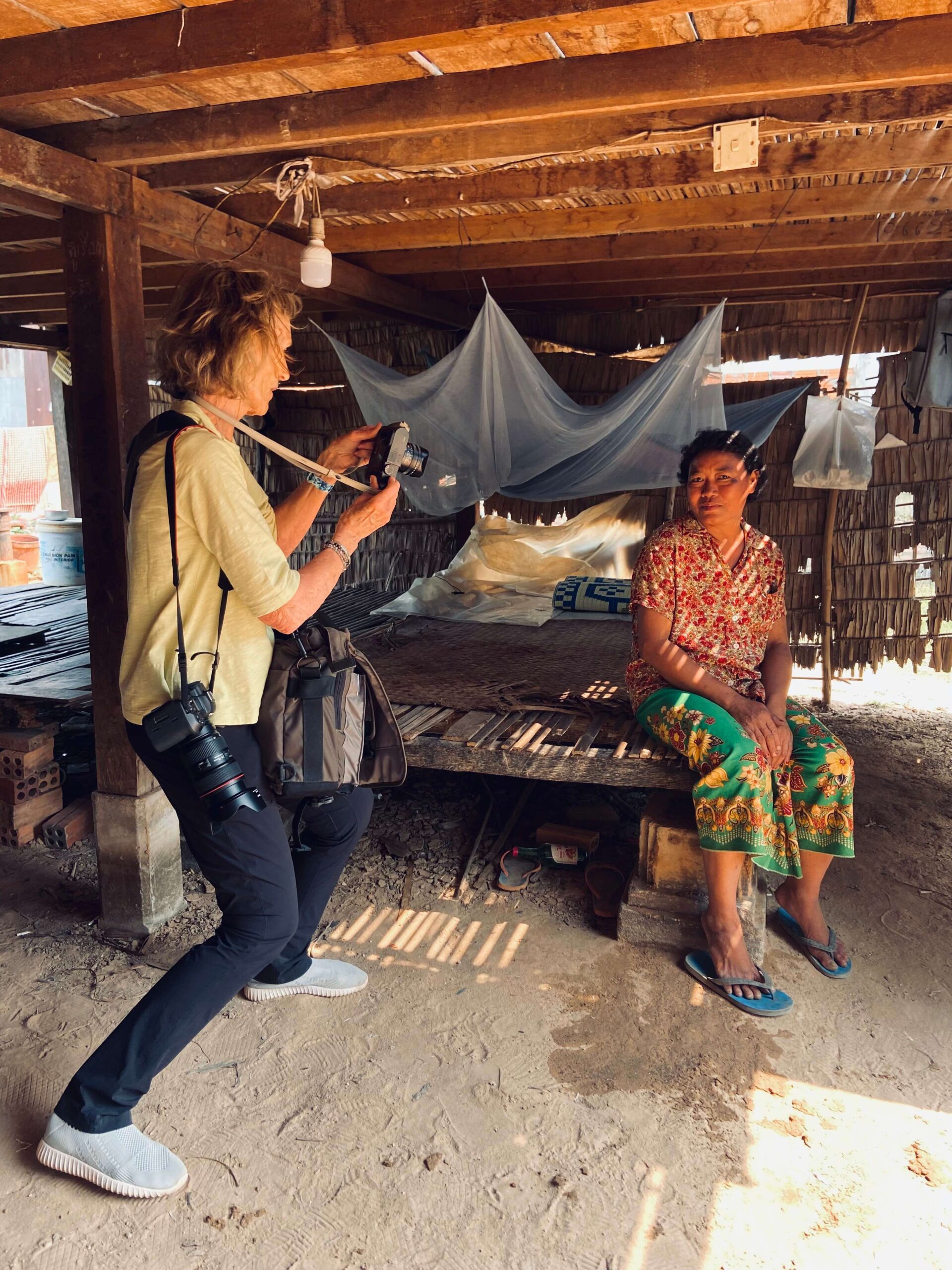
The starting point is Phsar Chas, the central market, where Siem Reap does its actual shopping. Fish, vegetables, herbs, hardware, fabric, all of it across narrow lanes that reward the person who slows down. The camera earns its keep here: the subjects are everywhere and the Cambodian instinct is to smile rather than turn away.
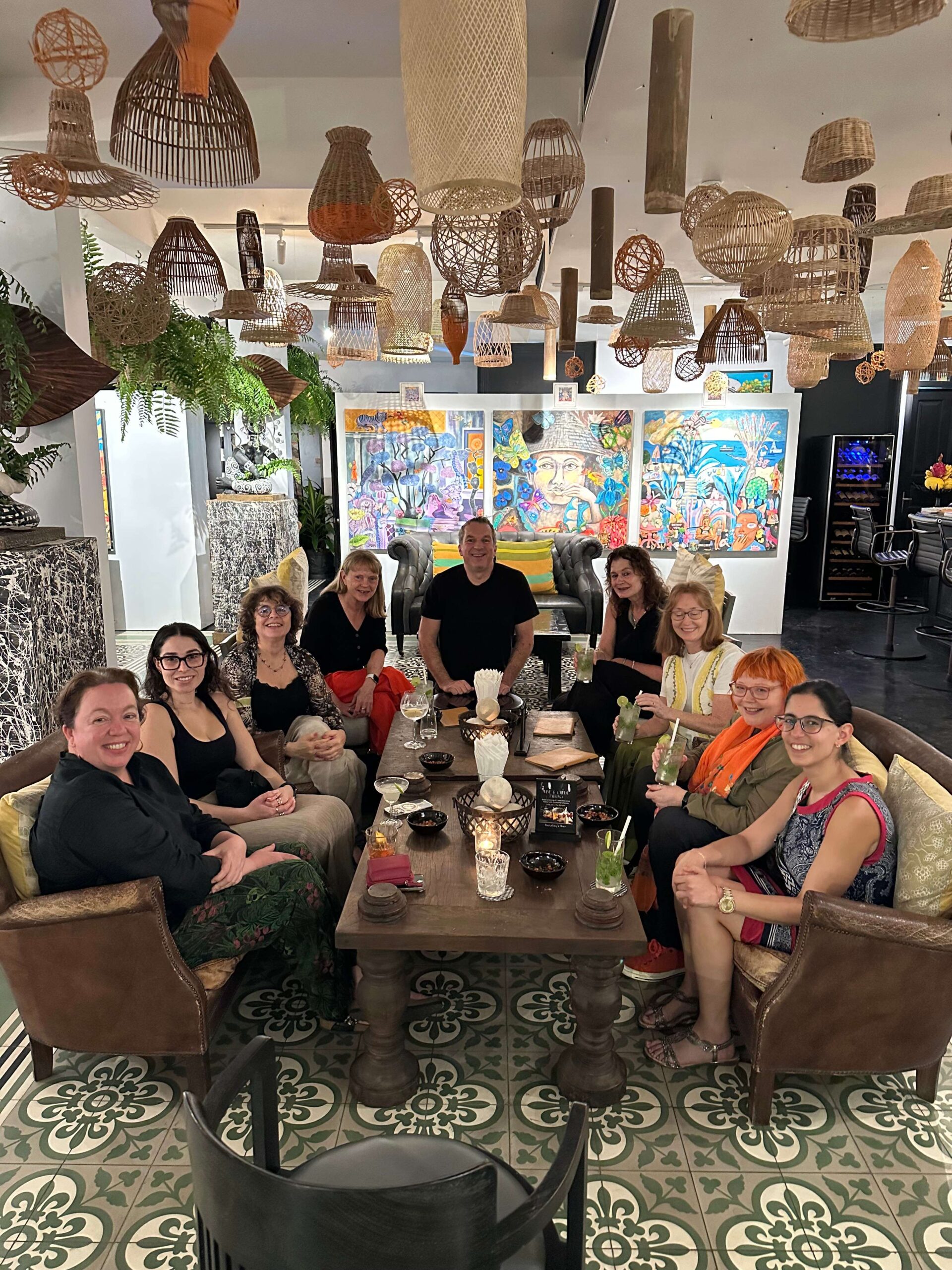
That evening, cocktails at Bensley’s Bar: Shinta Mani’s open-air gin bar named for the hotel’s architect and philanthropist Bill Bensley. Part of every drink goes to the Shinta Mani Foundation, which funds education and healthcare in Siem Reap. One of those places that makes you feel good about having another round.
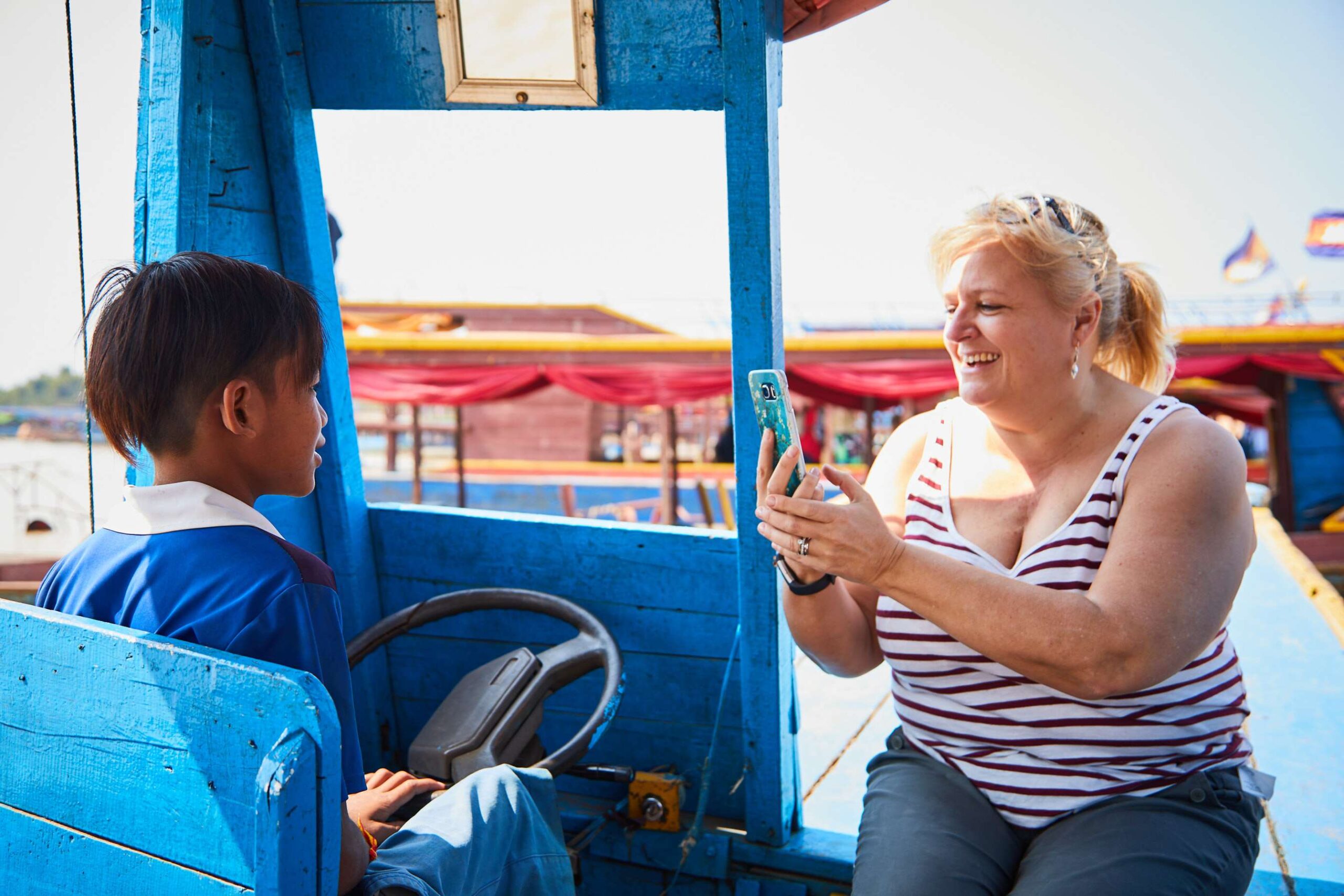
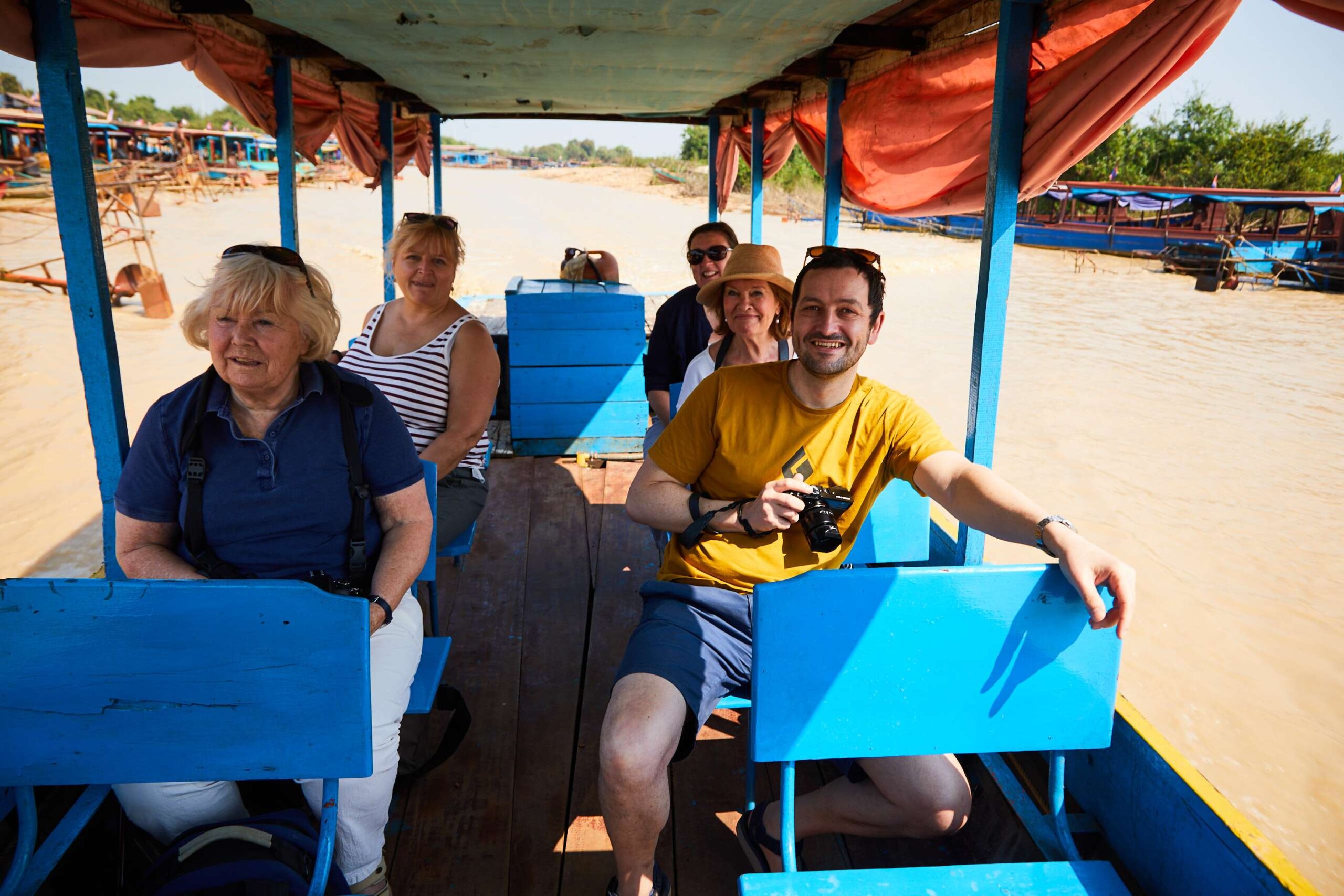
Day 4, out to Kompong Pluk. You board a hollowed-out canoe and move through a flooded forest of mangroves, trees rising out of the water on either side, completely quiet except for the paddle. The village sits on stilts above the Tonle Sap floodplain, houses towering six metres above the waterline. The canoes are run by women from the fishing community. One of those afternoons that’s hard to describe without sounding like you’ve made it up.
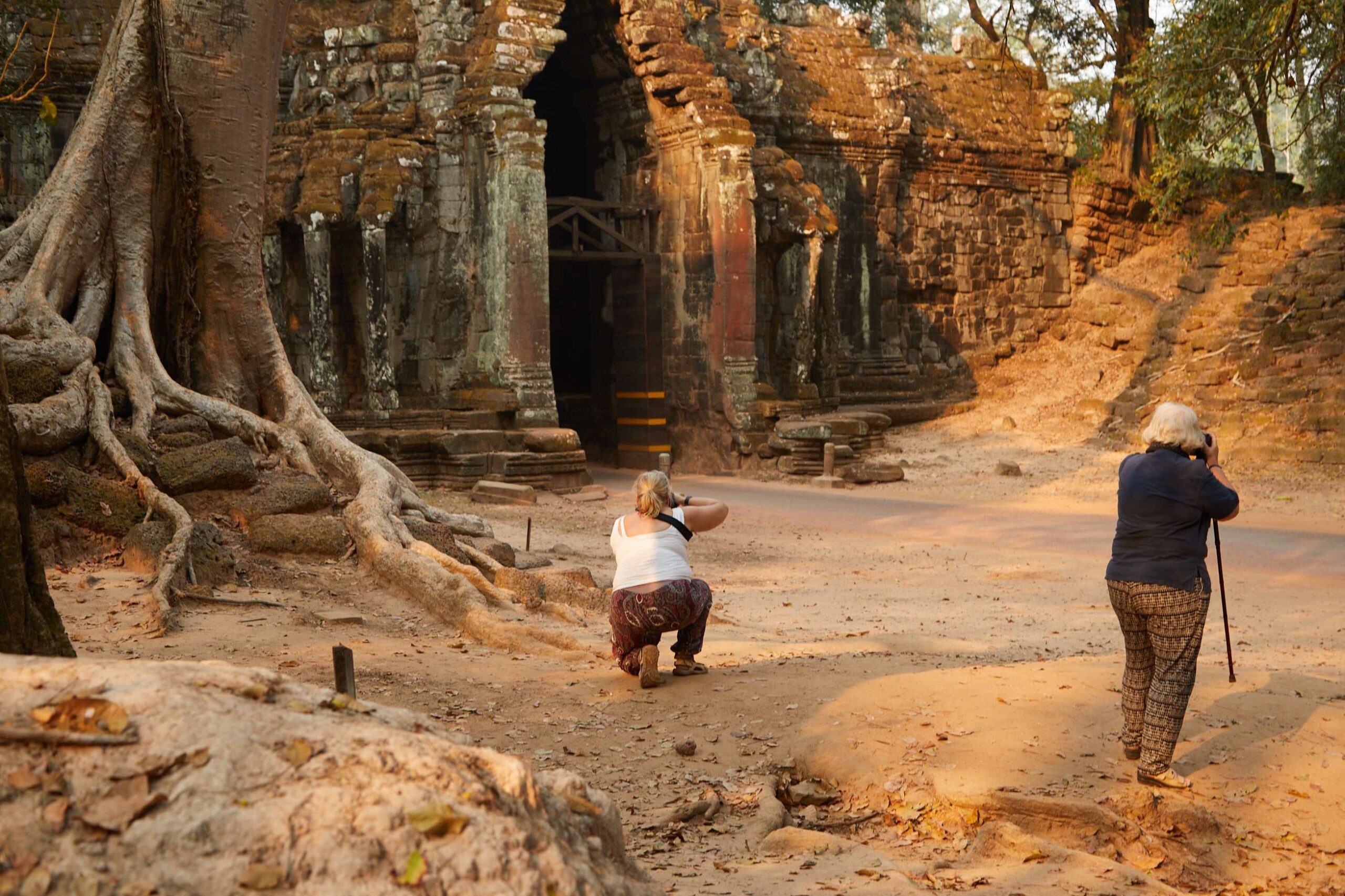
An early start on day 5. Angkor Wat officially opens at sunrise and the crowds arrive with it. We don’t go to the front gate. There are spots in the complex that most visitors never find, accessible before the coaches arrive, where you can have extraordinary light and no one else in the frame. Your guide knows where they are.
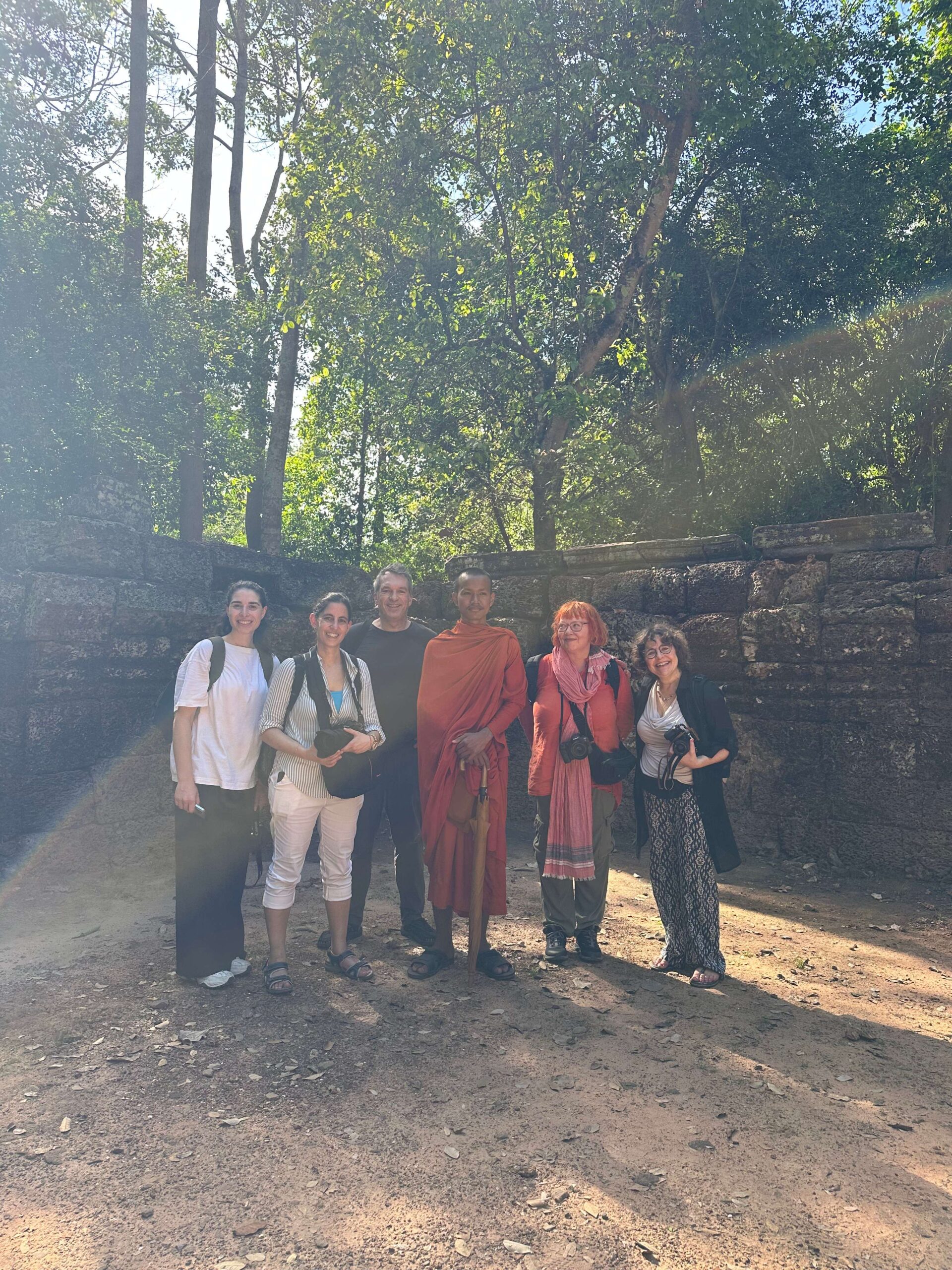
Then Ta Prohm. We arrange for a local monk to walk the complex with us: just him, just the group, for over an hour. The silk cotton trees have spent nine centuries pulling the galleries apart, roots the size of cars wrapped around doorways and walls. He’s happy to talk, happy to be photographed, happy to simply wander. There are moments in travel where the hair on your arms stands up. An hour alone in a nine-hundred-year-old jungle temple with a monk who has nowhere else to be. No other visitors. No time limit. This is one of those.
Back at the hotel in the afternoon. Salt water pool, spa, horizontal time.
Day 6 is your own until evening. Then a walk to Wat Bo, one of Siem Reap’s oldest temples. Arrive at prayer time and you hear the monks before you see them: a low, continuous chant that fills the courtyard and doesn’t quite leave you when you walk back out.
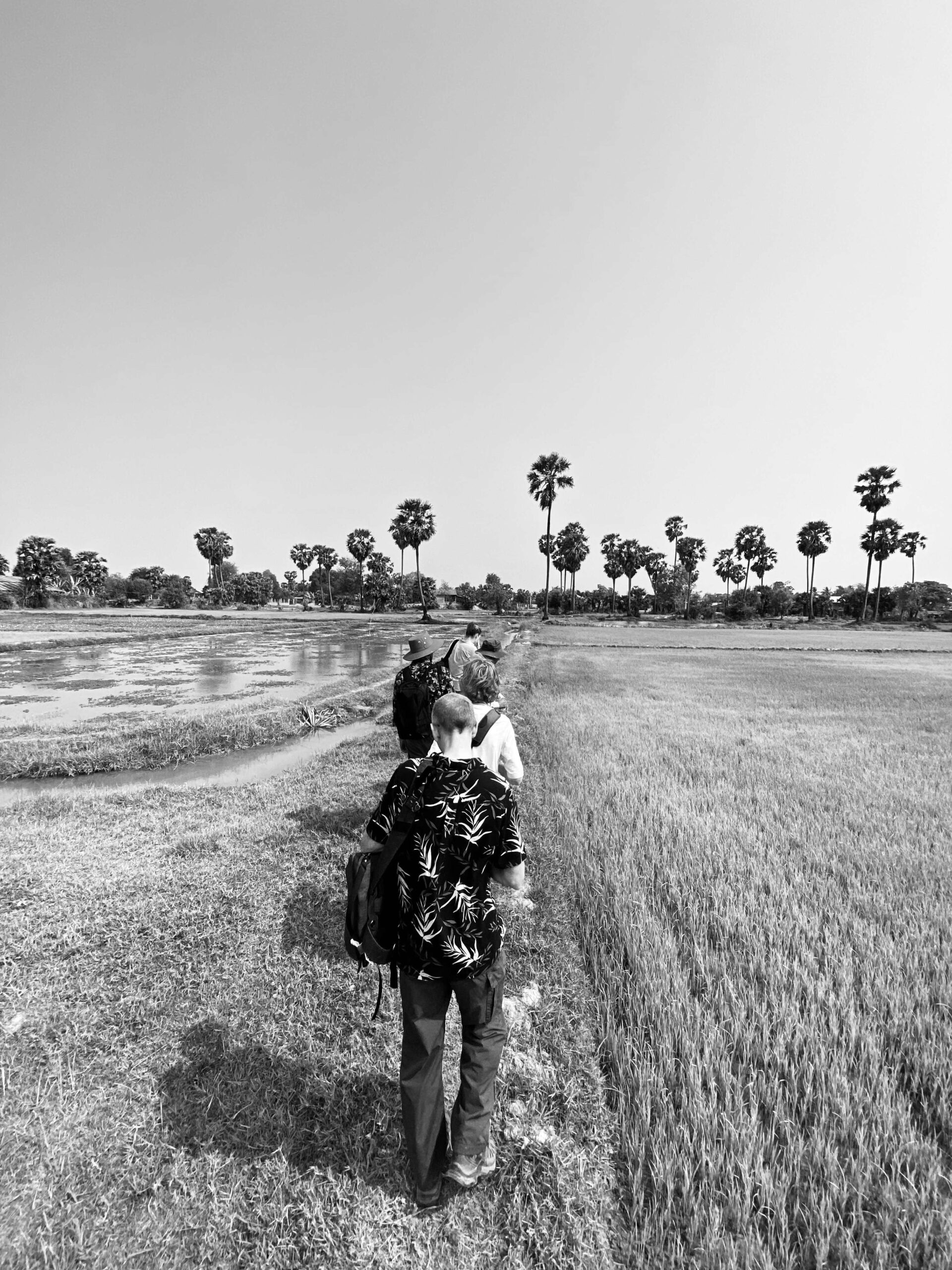
Day 7 takes you out of Siem Reap with our local NGO partner, an organisation that works permanently in rural Cambodian villages: running schools, providing food, offering training and advice to families who need it. This isn’t a visit to look at poverty. It’s a chance to see the work up close and briefly be part of it, helping out, talking to people, understanding how the operation runs.
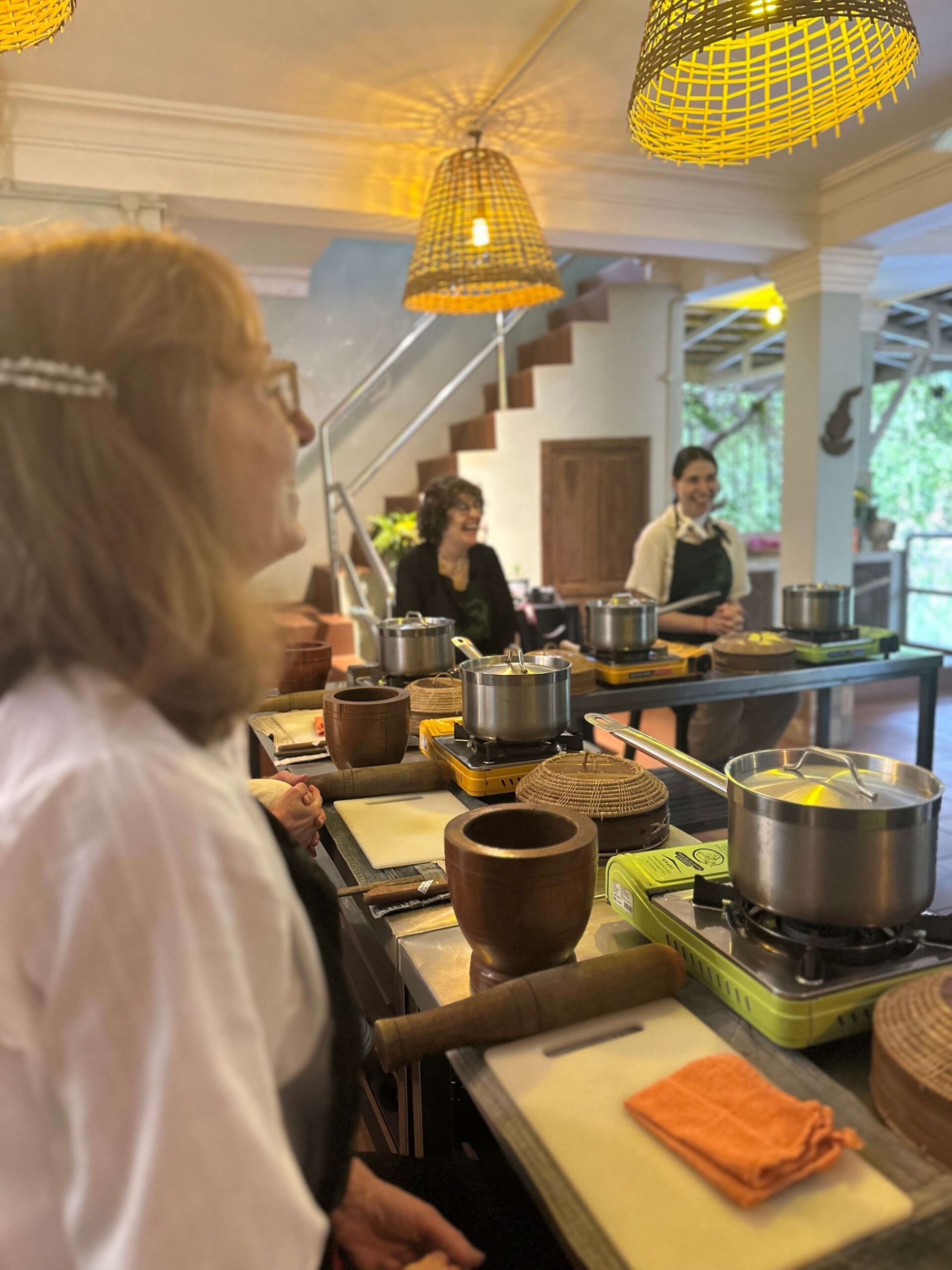
The cooking class in a village stilt pavilion comes afterwards. You make a three-course Cambodian feast from scratch and eat it there. What you pay covers more than your own meal: the surplus ingredients go directly to families in the village who need them. It’s a good system. Simple, but it works.
That evening, Phare Circus. We arrive when the performers do: stretching in the wings, costumes going on, makeup being applied, the particular focused quiet that happens before a show. You’re backstage for all of it. VIP seats for the performance itself. Phare trains underprivileged young Cambodians in acrobatics, theatre and music, and puts them on a stage telling stories that belong entirely to Cambodia. Genuinely unlike anything else on the trip.
Day 8 starts optionally at dawn with a helicopter above the jungle canopy, all two hundred square kilometres of Angkor spread out below in the early light. For those who go, it tends to settle the question of scale in a way that standing inside the complex never quite does.
Then three of the less visited temples in the complex: Preah Khan, Ta Som and Bayon. Most visitors to Angkor never reach these. Preah Khan alone was once a city of a hundred thousand people: a Buddhist university with a thousand teachers and a thousand dancers. The jungle has been reclaiming it ever since.
Deep inside Preah Khan, adjacent to the central shrine, is a hidden chamber. Inside it, a jewelled bas-relief carving of one of King Jayavarman VII’s queens: undisturbed, unsignposted, not on any map handed to tourists at the gate. You need to know exactly where it is. Our guide does.
By day 9 you know what you came for. Some guests want to go deeper into the countryside: juvenile monks living in a remote temple, a morning spent quietly in their company with a camera. Some go back to the villages to spend more time with our NGO partners and the people they met earlier in the week. Some head to the big market on the edge of town, or lose a morning in the backstreets they keep meaning to return to.
We put together a tailored plan for each person based on what’s moved them most during the week. There are no wrong answers. A tuk-tuk costs two dollars. Cambodia is generous with its time.
A few things worth knowing about: the silk farm at Artisans d’Angkor outside town, where you can watch traditional weaving still being done by hand. The floating village of Chong Kneas at the northern edge of the Tonle Sap, different in character to Kompong Pluk and worth the journey. And Banteay Srei, a smaller temple an hour north of Siem Reap, carved entirely in pink sandstone with a delicacy that makes everything else at Angkor look rough by comparison. Most guests have never heard of it. Most guests who go say it’s their favourite thing they saw.
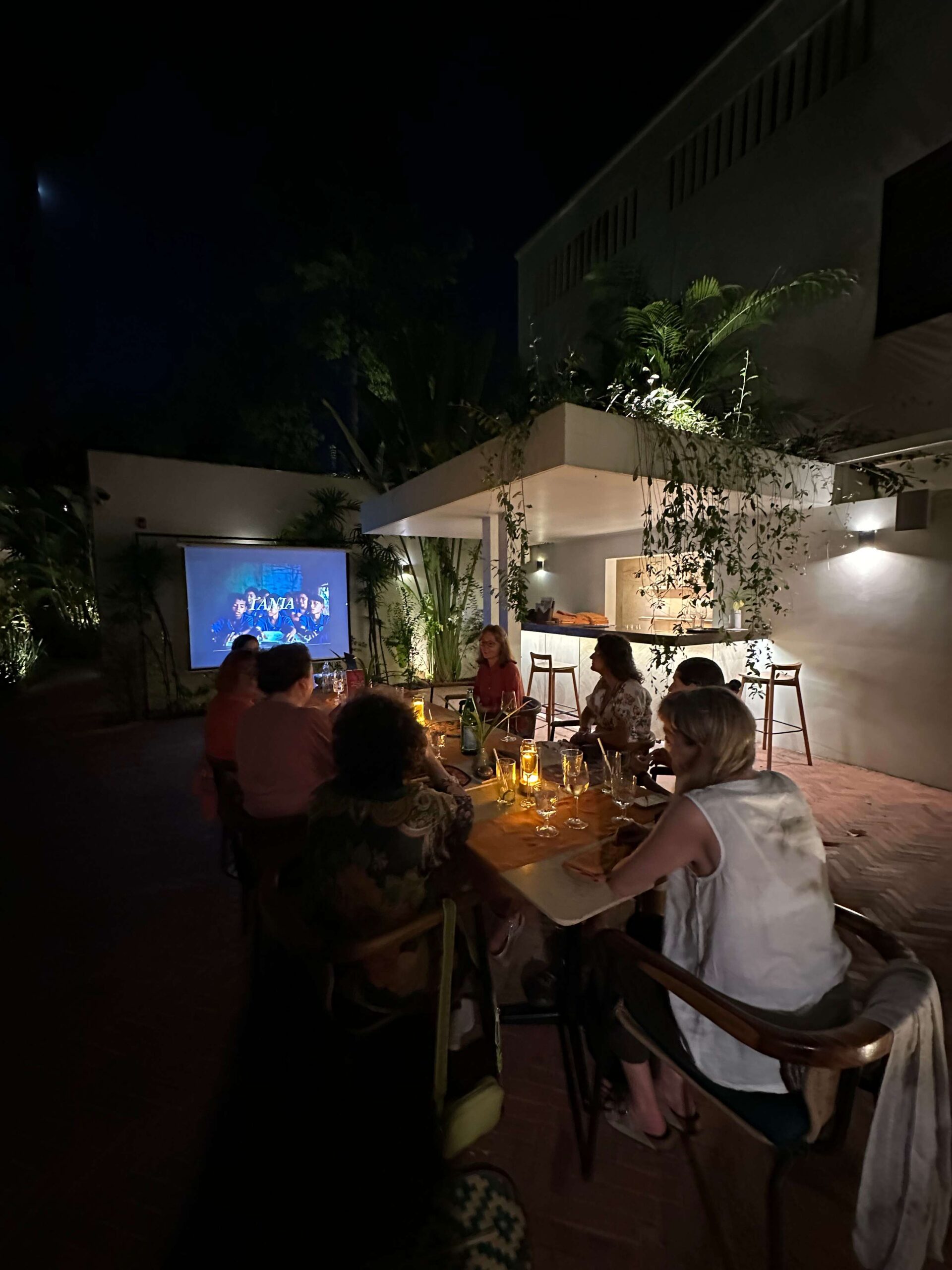
That evening, a private dinner by the pool. The hotel sets it up, the group sits together, and somewhere over the course of the evening someone puts their favourite image from the week on the table. It tends to go on longer than expected. Later, into town.
On the final morning, your guide sits with you one to one: a look back at the week, what you found, what surprised you, what you’re taking home. Not a critique. Just a conversation between two people who’ve spent ten days in the same extraordinary place. Then a light lunch, farewells, and the car to the airport.
You’ll leave wishing you had more time. They all do.
Dates & Prices.
5 – 14 March, 2027
10 days. 9 nights. Starts and ends in Siem Reap, Cambodia.
£3485 / £380 single supplement
Price includes
9 nights boutique accommodation at listed hotel (or similar)
10 days tuition from our UK-based pro photographer/guide
7-day pass to Angkor Wat complex, with guide
All transfers to and from the airport on suggested flights
All transportation between locations
Backstage passes to Phare, the Cambodian Circus
Entrance to NGO village, with cookery class
Boat ride on Tonle Sap lake
1-on-1 guidance throughout
Price excludes flights & meals.
There are no direct flights to Siem Reap from the UK. Most guests fly via Bangkok, Singapore or Kuala Lumpur: all three are worth a day or two on the way. Flights start at around £500. Once minimum numbers are confirmed we will recommend the best options based on price, duration and routing.
One important thing to know before you book flights: we confirm the trip once minimum numbers are reached. We will contact you as soon as that happens. Please do not book flights before we confirm. It protects everyone.
Foreign Correspondents Club.
The old French Governor’s residence, on the river in the Old French Quarter. Michelin Key holder, Condé Nast top 15 in Southeast Asia. Saltwater pool, hardwoods, Cambodian silks. Exactly where you want to be.
I expected to take a few decent pictures. I didn’t expect everything else — the restaurants, the guides, the behind-the-scenes access, the transport, all of it sorted. It meant we could actually focus on Cambodia rather than logistics. Unreservedly recommended.Tania, Amsterdam